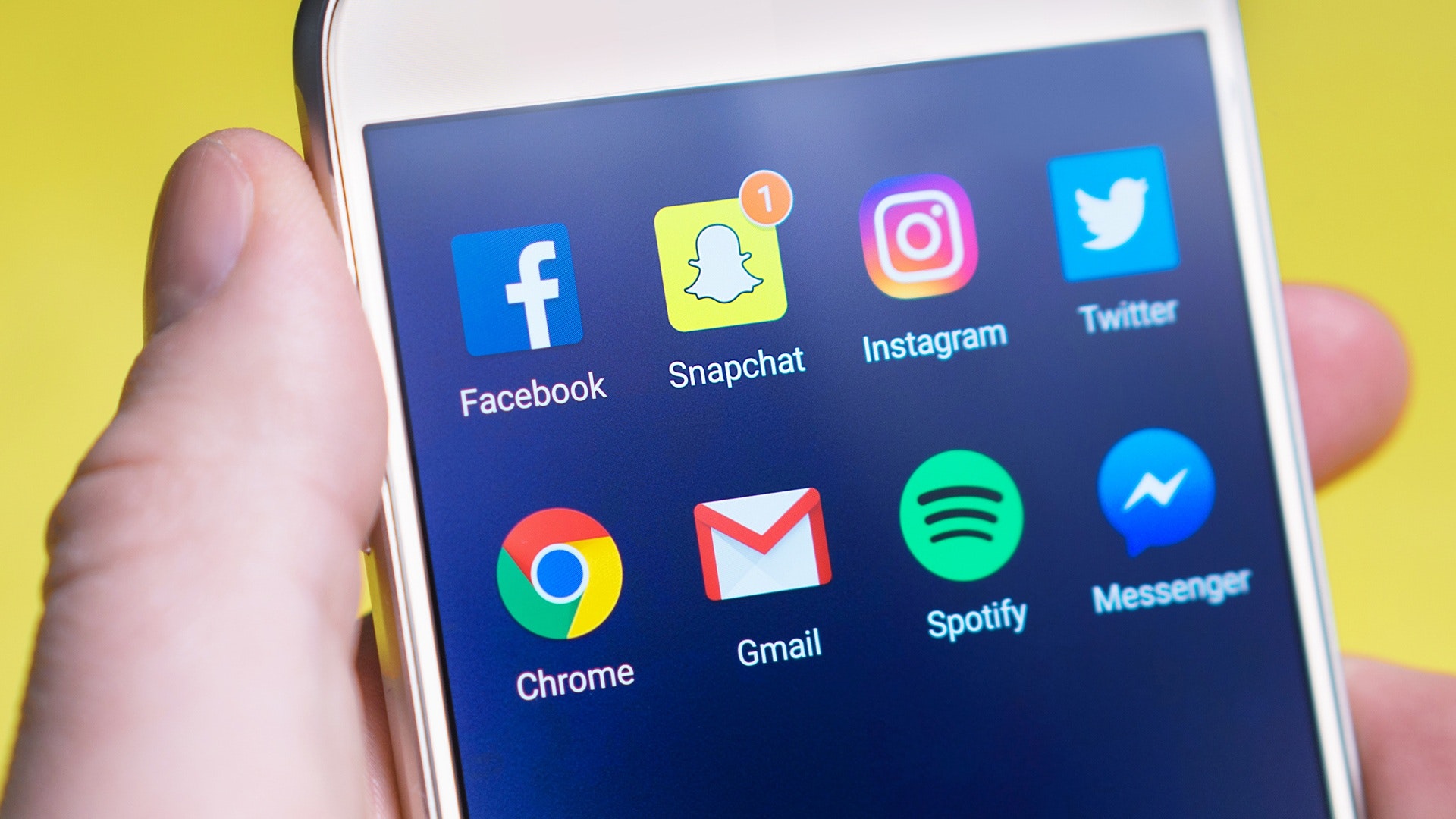
Social media is an umbrella term for interactive technologies such as websites and applications that allow users to interact digitally with others by creating and sharing information, ideas, opinions, interests, etc.
Some popular social media platforms include Facebook, Twitter, Instagram, Snapchat, and YouTube.
Research has shown that there are 4.59 billion social media users worldwide. The number of social media users will increase to six billion by the end of 2027.
What is social media marketing?
When a business brand uses social media platforms to promote its products or services, it is known as social media marketing.
There are several benefits of social media marketing. It helps increase brand awareness among customers online, building a dedicated community for the people interested in the brand or product, interacting with customers, providing services, etc.
What is a social media marketing plan?
An action plan that summarizes and gives you the overview and direction of your activities on social media to achieve your business goals is a social media marketing plan.
The Dallas Digital marketing agency further simplifies the definition as an action plan that tells you what you ought to do in the social media space to achieve your business goals.
Why is a social media marketing plan crucial?
With a flush of content everywhere, your efforts to make a mark and achieve your goals through social media could vanish into thin air.
A social media marketing plan helps keep your marketing efforts on track and aligned with your business objectives and goals.
The more detailed your social media marketing plan is, the more your chances are to succeed.
Below are the steps to create a social media marketing plan for your business.
1. Social media goal
The Dallas digital marketing agency agrees that a social media goal is often the first and vital step on which the entire marketing efforts hinges. A clearly defined social media goal will go a long way in steering the direction of your marketing efforts.
It is also equally essential that the social media goal should be in line with your overall marketing and business goals.
Studies show that the primary goal of digital marketers in the social media marketing plan is to promote their business followed by the goal of brand awareness.
It is also vital that your goal is specific and measurable to quantify your actions and the results derived from them. A good example of this is as below:
Use Facebook for all festival and seasonal marketing campaigns and increase engagement by 50% and sales by 20%.
2. Define and track meaningful metrics
As discussed above, one of the important traits of an effective social media goal is its measurability. Goal measurement should always have well-defined parameters and standards to track their performances.
Most digital marketing companies in Dallas believe that just as setting goals is crucial, so is defining the metrics.
For example, social media goals to increase customer engagement can be measured by the number of followers, comments, likes, shares, mentions, etc. Similarly, the goal to increase sales can be measured by conversion rates, the number of clicks, etc.
3. Know your audience
Knowing your audience is the key to getting into their hearts and minds using social media. There are two main things you need to know about your audience to enrich your engagement experience with them.
Who is your audience?
Understand your audience’s age, demographics, average income, occupation, etc. There are plenty of ways to find such information. Do not assume things on the internet. Rely on data. You can find out all the relevant data using social media analytics tools.
Some widely used social media analytics tools are Google Analytics, Hootsuite insights, UTM parameters, etc. Some are free to use, while others are free to try.
Professional digital marketers in Dallas digital marketing agency derive relevant data from social media analytics tools and spend considerable time and effort to understand the audience. Once you know who your audience is, the journey becomes easy.
Once you know who your audience is, the immediate next thing you should do is find out what your audience likes and dislikes. What are the preferences, aspirations, and expectations? What are the issues and problems they might be facing that your product can solve for them?
Knowing about the audience’s interests can help you connect the dots with social media marketing campaigns.
4. Know about your competitors
Every business organization has to operate in a competitive environment. If your business has competitors, then chances are your competitors will have their online presence on social media platforms. Use it to your advantage. Do a competitive analysis and know what your competitors are doing on their social media.
Some top digital marketing agencies in Dallas and elsewhere agree that competition is inevitable. And, it is healthy too. You need to know how to play the game smartly.
Competitive analysis is done not to snatch customers from your competitors. Nevertheless, the analysis is more about knowing your competitor’s strengths and where they are lagging so that you can take the opportunity and focus on the core area where you know your competitors will pay less attention.
For example, if you find in your analysis that your competitor has an immense following on Facebook but does not have a Twitter account and a YouTube channel for their business.
If you find out that most of your audience seeks the brand’s presence on YouTube and Twitter, then you get a great opportunity to focus on these two platforms rather than trying to battle it out with your competitors on Facebook.
5. Select your media platform
Once you know about your audience and competitors, you will get a clear picture of which social media platforms you must use to interact with your audience and move forward with your marketing campaigns. However, whenever you select a social media platform, you must devise a strategy for each platform for your marketing efforts to reap the best benefits.
This is because every social media platform operates differently, and the audience there will react differently. If your data analysis revealed that compared to Facebook, the average audience age on Instagram is younger, then the content that works on Facebook might not work well on Instagram. Thus, while selecting your media platform, ensure you have a dedicated strategy for each platform.
Some brands use different platforms for different purposes. For example, the company may use Twitter for customer service and retention, YouTube for informative videos and solving customer problems, Facebook and Instagram to engage with customers and launch marketing campaigns, etc.
The Dallas digital marketing company suggests that you can write a simple one-liner mission statement for each of these platforms to help you keep focused on your social media activities.
For example, we will use Twitter to service our customers so that the volume of customer emails and calls is lowered.
Or, we will use YouTube videos to demonstrate how to use our products to keep customers well informed.
6. Create a prolific profile
Once clarity is gained about what social media platforms to use, and for what purpose, you must create an appropriate and attractive profile or Bio for each site.
Creating a social media profile is a different ball game altogether. Your profile is your branding on social media. People visit your profile to see the information about your business.
So ensure that your profile is updated regularly, has catchy and relevant tags attached, has attractive images updated, and has a solid call to action.
7. Brainstorm ideas and find inspiration
You need to put the word about your company’s products and services on every social media platform you have chosen to engage.
Your digital content has to be unique to distinguish it from others. You can brainstorm your content ideas, create unique and relevant content and engage with the customers.
However, you can find inspiration for the content from other top-performing account profiles.
The best digital marketing agencies in Dallas point out that sometimes, you may find inspiration for a topic across different platforms too. For example, you may find an interesting article on LinkedIn that inspires you to make an infographic for your Facebook page. Thus, keep an open mind and list all the ideas that inspire you.
8. Social media content calendar
Your unique content indeed has to be posted on social media. Furthermore, you must have a schedule for the distribution of the content in a manner that will fetch the best results.
Just as the different social media apps have different audiences who prefer various media and posts to consume, the frequency of each post also differs with each platform and its content. The content calendar should incorporate these different frequencies of posting on various platforms.
The digital marketing companies in Dallas agree that posting too much or too little content can backfire. Your posting plan must have a balance of quantity and quality of the content that drives the objectives of your business.
9. Create compelling content
Now is the time to create the contents from the topic ideas you brainstormed earlier. However, ensure your content is in line with the mission statement of each social media website as you have outlined before.
10. Track performance
Remember the initial steps of setting goals and the metrics? Well, now is the time to evaluate whether your social media marketing plan has been effective or not.
Track and compare the metrics you had set up earlier. Do it with each of the social media platforms you are using.
Nevertheless, if the performance of your social media content and other efforts on these networks do not match the standards set in the metrics, then you need to adjust your plans accordingly.
According to the best practices of the finest digital marketing companies in Dallas, a good social media marketing plan is rigid in its implementation and flexible in its formulation.
Wrap Up
When you plan for your company’s social media presence, follow the steps outlined in the article, and you will make a brilliant social media marketing plan for your business.
However, managing marketing efforts digitally is not everyone’s forte. To keep the focus on the core values of their brands, many companies outsource their digital marketing efforts to professional digital marketers.