Why is My Website Traffic Not Converting? 9 Reasons Behind Low Conversion Rate
July 18, 2023 | Sudeep Banerjee
Are you troubled by the enigma of your website’s lackluster performance? Does your online presence feel like an unsolvable riddle, that has a steady stream of website traffic not converting into any tangible results? It seems mysterious at times and you start wondering and looking for answers but the obvious question remains: why my website doesn’t convert?
Fret not, because we bring to you 9 plausible reasons behind the low conversion rate of your website. When you understand the rationale behind low conversion, you may work around those and fix them to make your website a conversion magnet.
But first, what’s a good conversion rate?

Conventionally, a conversion of around 2% to 5% of your web traffic used to be the standard benchmark for a good conversion rate. However, some websites average around 1% conversions and yet drive home great sales revenue due to their volume. This is especially true with e-commerce companies.
On the other hand, specific niches and top-performing websites have a conversion rate as high as 10% or more even if their traffic is moderate. They still can hit above the target due to various factors such as a well-optimized website and the nature of the business.
Read on to find out more about the secrets of conversion and what mistakes you may be committing that make your website’s high traffic evaporate in thin air. In other words, if you find those erroneous zones you would know exactly what to work on and turn around the situation 360 degrees.
9 Plausible Reasons Behind Low Conversion Rate
From faulty SEO optimization, negative mobile experiences, absence of clear CTAs, and much more, the reasons why the traffic on your website doesn’t convert into revenue-generating customers could be many. Together we will unearth the hidden gems that might just need a little tweak to breathe life into your digital presence and reach its full conversion potential.
1. Your Website SEO Optimization is Faulty
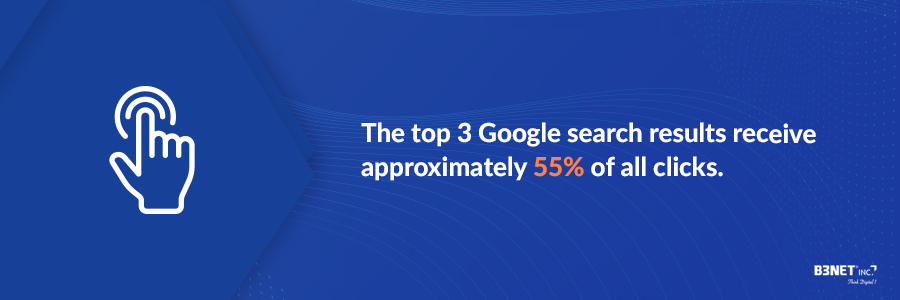
Imagine, out of tons of the search results generated, the top three results take away 55% of the clicks, leaving behind only 45% of the clicks for the remaining ones. This shows how important it is to rank high in the Search Engine Results Page (SERP). Also, how important it is for your website to be properly indexed and optimized for search engines to rank high.
One of the key factors your website might not be fetching any high-converting traffic is that it is not ranking high for the right set of keywords and queries the users are searching for. Simply speaking, your website and its contents might not be aligned properly or optimized to be search friendly. Let us understand it in detail.
SEO or Search Engine Optimization is the process of improving the quality of your website’s organic traffic. It involves an intrinsic understanding of the queries, phrases, and keywords that the users are searching for, and aligning those keywords in your website’s content to fetch a high rank in the search results.
- Misaligned and Messy Content:
One common issue is having misaligned and messy content on your website. This can confuse visitors and make it difficult for them to find the information they are looking for.
Ensure that your content is organized, easily scannable, and provides value to your visitors. Make them easily understandable by the average readers, and structure them along the lines of simplicity and clarity.
Let’s take up a case study to understand how SEO optimization affects your website’s traffic and conversions.
Case Study: Scarosso
An Italian brand offering modern handmade shoes and accessories, Scarosso has its business shipping to over 76 countries worldwide. Their website did not have much product visibility, and therefore sales were thwarted. They wanted to reverse the situation by achieving high product visibility and an increase in sales, through a high conversion rate.
The Remedy:
The SEO team worked to create unique product graphs for each product and lined each of them to their unique IDs. This allowed the Search engines to find the product data and instead of taking the customers to the list of the products page, it could directly suggest the particular product page the users were looking for.
The Result:
- There was an increase of 66% in website sessions
- The online orders increased by 187%
- The sales increased by 190%
- The Return On Investment (ROI) was close to 4 times. That indicates for every dime spent, 4 were earned back.
2. Negative Mobile Experience – Mobile Optimization
There is a reason why companies with the biggest conversion rates have transitioned their website on the lines of the mobile-first design approach. With more than 50% of the web traffic coming from mobile devices, the mobile-friendliness of a website has to be given top priority.
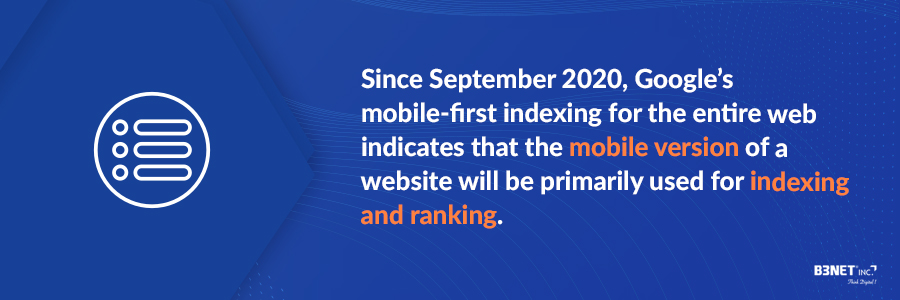
So here’s a fact check for you. Is your website mobile responsive? If you answered no, you have found one of the major factors why your website is not converting.
When it comes to user experience, if your website opens with a standard desktop view on a mobile device, it surely will reflect a high bounce rate. And, you need to fix it as soon as possible, because you do not want to lose more than half of your potential users just because of not offering them a website in their preferred version on the device of their choice.
3. Multiple Choices Leave Customers Confused – No Clear Focus On A Single CTA
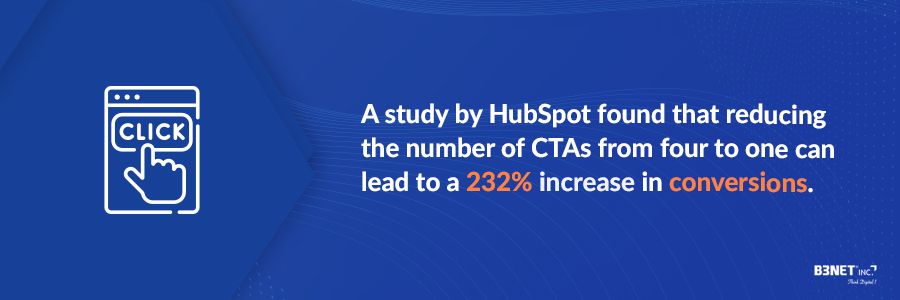
CTAs or Call-to-Actions are triggers for your users to take action. It has to be strategically placed, made captivating and attractive, and direct the customer to take a desired action.
These CTAs could either convert to sales-generating leads or simply register a sale for your website. Examples are: Subscribe now, Download free, Learn more, Create my account, etc.
However, offering too many options for the customers inside one CTA, such as ‘Subscribe Now & Create an Account’, etc. Or, offering more than one CTA for the customers on the same web page can lead to confusion.
This is often known as analysis paralysis or decision paralysis where customers are perplexed by the multiple choices they have in front of them leading to indecision and thus, lost opportunities.
By providing a clear and singular call to action, you eliminate decision paralysis and guide visitors toward a specific action, increasing the likelihood of conversion.
Case Studies:
Some of the leading digital marketing agency experts agree that tweaking the CTA is perhaps the easiest and quickest way to garner some results. There are a lot of interesting case studies where a tweak in CTAs leads to a dramatic change in website’s conversion rate. Let’s see some of them below.
Making the CTA button larger, denser, and darker, helped Demio, a webinar management company, to increase its conversion rate by around 58 percent.
Kommunicate is an AI chatbot builder. And it witnessed an increase in the Click Through Rate (CTR) when they replaced the email field with the text “Try for free”. You can even notice that the first CTA button is placed at a strategic location, viz., top right corner.
The subsequent CTAs are placed as the content progresses further down, but they have a lot of space around to be noticeable.
4. Your Website is Forever in the ‘Buffering’ Status
3…2…1… and off they go!
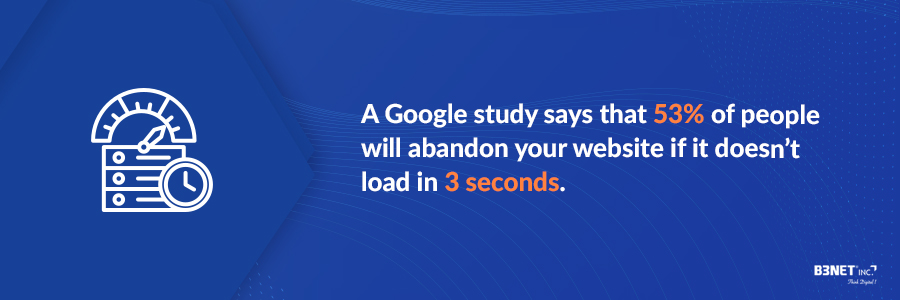
It’s quicker than the time an average person takes a breath. One of the major factors why your website is not converting is that it might be pretty slow in loading. Slow-loading websites can be a major turn-off for visitors.
In this fast-paced and highly mobile and portable age, your website should load quickly. If it doesn’t, visitors are likely to abandon it and seek alternatives. And, you don’t want that.
- High Bounce Rate
A high bounce rate indicates that visitors are leaving your website without exploring further. When a website takes too long to load, it not only leads to high bounce rates but also contributes to a negative user experience, resulting in missed conversion opportunities.
The reasons could be many. Faulty web design, heavy file sizes increasing load times, bad layout and navigation, or bad traffic source where traffic is coming from an erroneous source, for example, a doctor’s website being visited by traffic from a car brand due to adverts placed on them.
Optimizing your website performance, including compressing images, and using cache techniques to increase browsing memory can reduce load times and increase visitor engagement.
Case Study: Shoppe’s Shoppe
A gift shop boutique Shoppe’s Shoppe offers beautifully designed gift boxes and gift shop items like home decor, accent pieces, candles, etc., from their eCommerce website.
It was doing well locally but wanted to leverage more on the digital presence to increase its customer base. However, their main area of concern was an unengaging website, and high bounce rates, and they did not have any SEO knowledge.
As a result, their website content and copy were lackluster, uninformative, without targeting any keywords, and lacking SEO optimization. Neither their posts nor product listings were SEO optimized, so Sophie’s Shoppe did not rank in any Google search results.
The Remedy
After a thorough audit and analysis of the website, it was revamped and redesigned and all the out-of-stock products were removed. This made the new website fully functional, and updated with the current stock products listings.
The content was made more engaging and SEO optimized with relevant targeted keywords placed prominently and strategically. Products listings were relisted as per keyword research and after conducting a thorough competitor analysis.
The Result
- 248% increase in organic search traffic
- New users increased by 236%
- 93% reduction in bounce rate on the website
- Significant increase in engagement, customer base, and revenue
5. High Added Costs At Checkout & Complicated Checkout Procedure (Leading to High Cart-abandonment Rate)
Experts at leading digital marketing agencies say that it might very well be due to various factors and a lot of them are static and not going to change. But, the ones that are variable and can be changed should be changed.

Out of the total number of users who abandon the cart, 48% of users abandon it due to unexpected extra costs at checkout, like shipping, tax, etc.
The checkout process is a critical phase where potential customers can be lost if they encounter unexpected costs or a complicated procedure.
- No Option for Guest Check Out
Forcing visitors to create an account before making a purchase can be a significant deterrent. Consider the fact that 24% of users abandon because the site wanted them to create an account.
A simplified checkout procedure enhances the user experience and encourages conversions. Offering a guest checkout option simplifies the process and increases the chances of completing a purchase.
6. Your Landing Page Has Too Many Pop Ups
According to the best web designers, pop-ups are simply bad designs on display. They hinder the user experience and might also irritate the user if a website’s landing page has too many pop-ups. The most common pop-ups are for cookie acceptance, followed by pop-ups for email subscriptions and free ebook downloads.
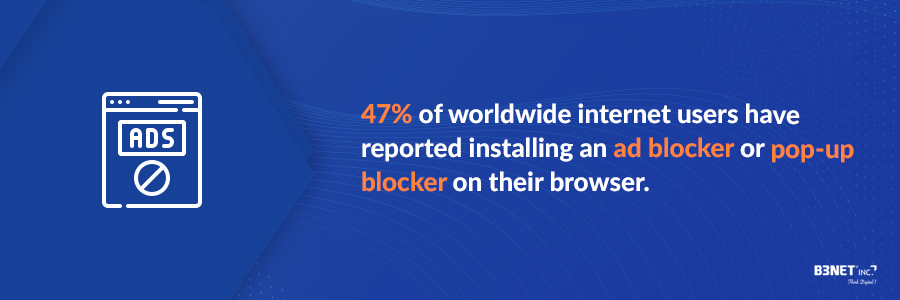
While these may be great lead generators, they should be used moderately and wisely. Despite being an irritating element of web designs, it still rakes in a lot of conversions.
According to Wisepops exit intent popups, i.e., popups just at the moment of exiting the website, can save up to 20% of cart abandonment.
But, landing page pop-ups usually lead to a negative conversion, since the moment a customer lands on your website, it is greeted by a pop-up that they might not be expecting.
While pop-ups can be effective for promotions and lead capture, excessive use can frustrate visitors and hinder conversions. Striking a balance by using pop-ups sparingly and ensuring they provide genuine value to the visitor’s journey is the key to a successful conversion.
7. Your Products Are Great, But Not Your Website Pages – Bad UX
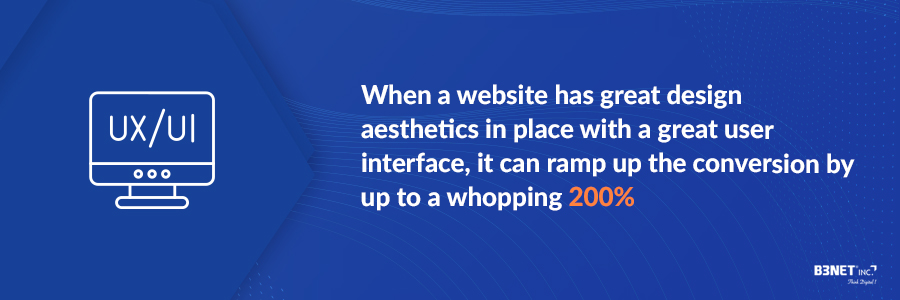
Having outstanding products or services is one thing, and even if your products and services are exceptional, a poorly designed and confusing website can restrict conversions. Because, if your website fails to deliver a seamless user experience (UX), visitors may feel discomfort and thus, hesitate to convert.
- There’s A Difference Between Great-Looking and Great-Performing Website
Although web designs should follow the principles of aesthetics, they should not be the sole driver of your website.
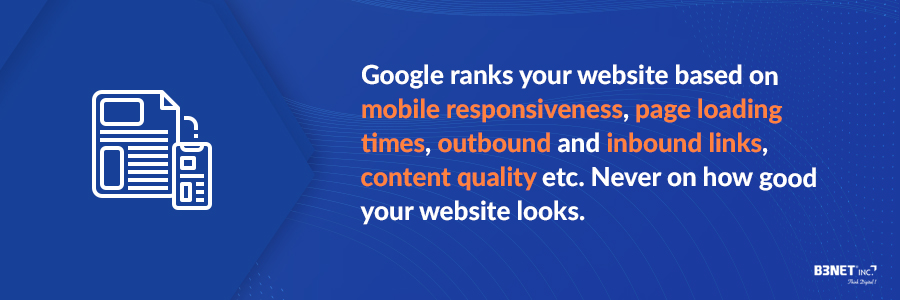
The best designers and strategic marketers from B3NET Inc., a pioneering digital marketing agency in Dallas, remind us that the website should please two parties simultaneously, viz., the search engines, and the users.
Thus, striking a balance with modern design aesthetics replete with color themes, typography, alignment, imagery, etc., along with ticking all the boxes for being search and user friendly will make the website a great-performing one.
8. More Focus On Guesswork Than Data-driven Insights
One of the reasons your website traffic is not converting is that you may be relying on gut feelings, guesswork, and assumptions rather than real-time data-driven insights.
Guesswork and assumptions about the market could be a risky game. It could hinder your website’s ability to optimize and capitalize on the opportunities leading to real-time conversions. On the other hand, leveraging data and analytics allows businesses to make informed decisions based on real insights.
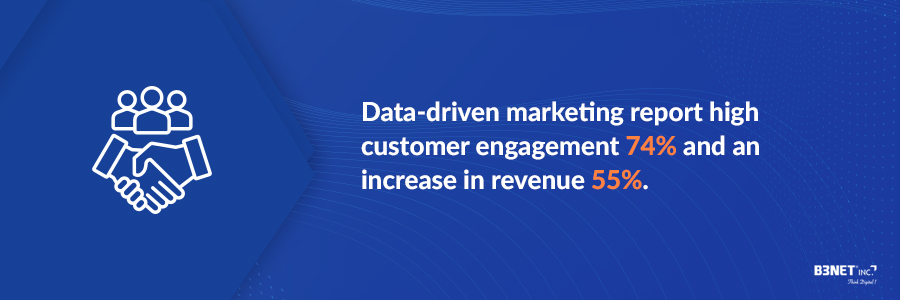
The best marketing and SEO strategists at B3NET Inc., advise you to utilize analytics tools to gather valuable data and make informed decisions to improve your website’s conversion rate.
Data-driven insights are conclusions or observations derived by analyzing real-time data from across the industry, including your competitors vis-a-vis your own website’s performance. It helps to make more accurate decisions that foster greater ROI and drive more conversions.
9. Your Conversion Tracking Game Is Weak
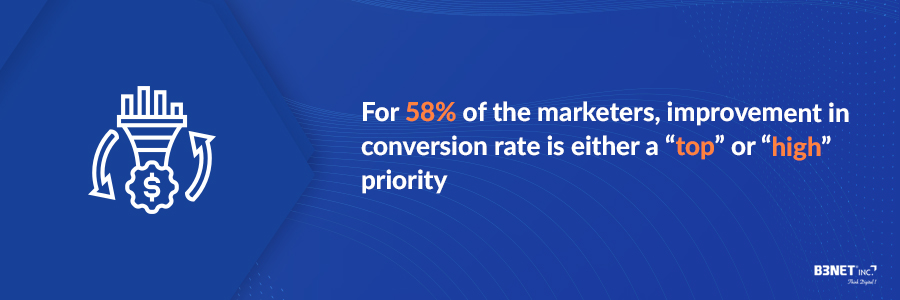
Conversion Rate Optimization or CRO is the process of increasing the conversion rates of a given traffic. In other words, when certain changes, tweaks, or improvements are incorporated into the website and its contents to increase the percentage of visitors taking a desired action, it is said to be implementing the practices of CRO.
Conversion tracking is a very important step in the entire process of CRO. Accurate conversion tracking is crucial for identifying what is working and what needs improvement on your website. If your tracking is inadequate, you may miss out on valuable insights to enhance your conversion rate.
Implementing robust conversion tracking enables businesses to identify areas of improvement, track campaign performance, and make data-backed adjustments to enhance conversions. Therefore, strengthen your tracking mechanisms to gain valuable insights and make data-backed decisions.
There’s a bit of technicality involved here, and therefore hiring a professional digital marketing agency might be a sensible decision for many people. However, when you start tracking the conversion rates, you will find the most answers to the one single question that was troubling you for so long: why my website doesn’t convert into a sales generating, revenue-minting machine?
Transform From “My Website Doesn’t Convert” To “My Website Is A Conversion Powerhouse”
We know how frustrating it feels when someone is trying to find an answer to the question of why my website traffic doesn’t convert. When you find the answer to that question, you will understand the crucial blocks that are hindering the conversion of your website traffic.
You may start implementing them straight away. Some of these may yield results pretty quickly, and it’s relatively easy to do them. Others may involve highly technical expertise and may require a different approach. If you are looking to increase the real-time conversion rate of your website, you can always take the professional assistance of a digital marketing agency.
As a trusted digital marketing agency in Dallas, B3NET Inc., specializes in helping businesses optimize their websites for better conversions. With years of expertise, experience, and a lot of happy customers, you can trust us to overcome the challenges of your website not converting and in turn drive measurable and meaningful results.

RELATED POST

Have you added schema markup to your site expecting ChatGPT or Google’s AI Overviews to start citing your content? But […]

Every year, we watch a similar pattern play out with clients who wait too long to think about the holidays. […]

A few years ago, adding “Reddit” at the end of a Google search felt like an internet hack. And today, […]