In the world where every business focuses on creating its own online identity, your capability to stand out from the rest increases your possibilities to get the well-deserved exposure, and eventually, win the competition. In order to get this done, however, you need to take care of the usability of your website. In short, you have to make sure that each of your website visitors has a pleasant browsing experience.
Almost every business is launching its official website, but hardly a handful of them are able to garner the desired attention. But why is that? Because frequently updating a website with fresh content doesn’t end the responsibility. Visitors need to be satisfied with the whole experience, and it depends on how quickly they are able to find what they are looking for. And when it comes to usability, it’s the web designers who have to play the most crucial role.
So, what are these methods which a web designer must implement to create an easy user interface? Let’s take a closer look at the “usability checklist” every web designer must keep in mind while designing a website.
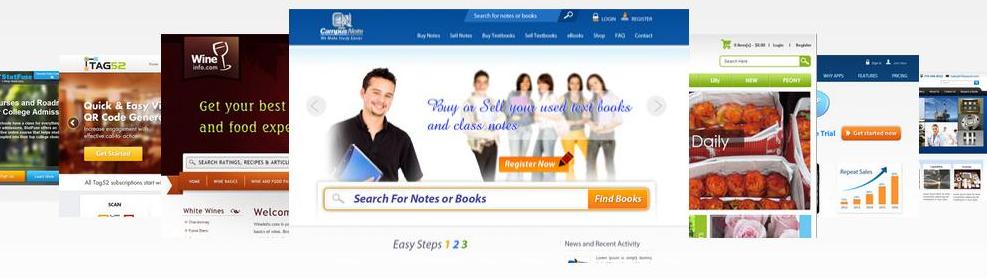
- Linking your Logo:Visitors do not always like to click the ‘Back’ button, and often need something which could take them directly to the homepage. In order to get this done, the logo of the website (mainly placed on the upper left-hand corner) is often linked to the homepage. This feature is so easy, simple and popular that some websites have even decided to let go off the ‘Home’ tab permanently.However, there are still dozens of websites who haven’t yet designed the logos to act like the ‘Home’ tab. Make sure that your website is not one of them. Smart visitors will always look for this feature in your website, and it’ll be a big blow to your value if your logo fails to take them to your homepage.
————————————— - Providing a Useful 404 Page:Most of you might wonder, what’s the whole point of letting us know the code of an error when there is a problem with a page? And frankly speaking, it’s not the fault of the visitors when they land on a wrong URL. Users need to feel comfortable, and it’s the designers who need to make the 404 pages useful.Instead of showing the code and the boring “Page Not Found” message, why not go for something meaningful? There is a lot of scope for innovations, and trying out new things like suggesting a possible destination and providing a search box or an apologetic message can work wonders. If you are looking for inspirations, you can click here.
—————————————- - Increasing the Hit Area on a Link:We often, if not regularly, fall victims to “mis-clicking” on a link. This mainly happens for two reasons – firstly, when two or more links are cramped up closely; and secondly, when there is no padding around the links.With the increase in the use of mobile devices to surf the Web, padded link targets have become a necessity. This is one simple way to enhance the usability. Padding around a link makes the clickable area larger, and thus, decreases the rate of mis-clicking (which is tremendously frustrating). This method of adding a large hit area on a link also comes helps smartphone owners who use their fingers to click on a link.
Conclusion
Designers also need to take a note of a few other important inclusions like creating active navigation, applying line height for readability, adding focus to form fields, and proper utilization of white space. If your web designer keeps all these things in mind and implement them correctly, you are sure to land up with a very user-friendly website.