Search rankings used to reward patience. Today, they use reward systems.
As Bill Gates once said, “The first rule of any technology used in a business is that automation applied to an efficient operation will magnify the efficiency.” No statement captures the state of SEO in 2026 more accurately than this.
The SEO professionals pulling ahead are not working harder than everyone else. They are working inside smarter systems, ones built on AI that research faster, optimize deeper, and execute without the manual bottlenecks that slow everyone else down. According to HubSpot’s 2025 State of Marketing Report, 68% of marketers who use AI in their workflow report significant time savings and better overall performance.
This shift has been building for a few years, but it has accelerated quickly. When tools like Semrush and Ahrefs rolled out AI-native features, and when ChatGPT became something SEOs could actually build workflows around, the gap between professionals using AI and those who were not started to show up in rankings.
The challenge is not finding AI SEO tools. There are hundreds of them, and the number grows every month. The real challenge is knowing which ones actually move the needle and which ones are just adding noise to your workflow.
We have done the filtering for you. The 10 tools in this list are the ones that serious SEO professionals are using daily to rank faster on Google, produce better content, build stronger backlink profiles, and automate the work that used to eat entire afternoons.
Whether you are managing one website or fifty, at least a few of these will fit directly into how you already work and start paying off faster than you expect.
1. Semrush
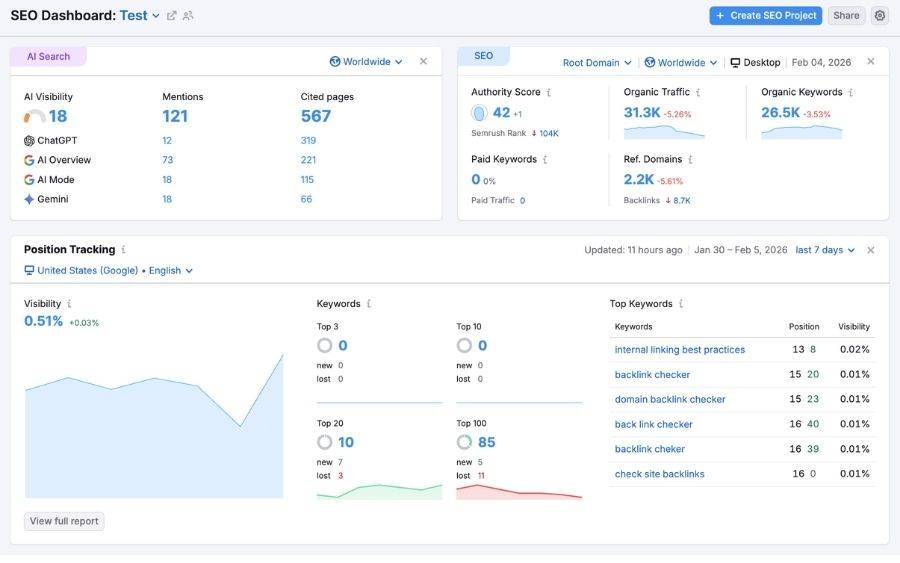
Semrush has always been the go-to SEO command center that combines keyword research, competitor analysis, and site audit into one platform. The platform has received meaningful AI upgrades that shift it from simply presenting data to actively helping you interpret what that data means for your specific rankings.
Semrush currently serves over 1.1 million users worldwide, with more than 117,000 of them on paid plans, according to its official financial filings. Its database spans 26.8 billion keywords across 142 geographic databases and 43 trillion backlinks, which means the data you are working with is rarely thin.
If you have ever wasted an afternoon switching between a keyword tool, a rank tracker, and a site audit platform, you know how exhausting that gets. Semrush solves that by putting everything in one place. Here is what you can do with it:
-
- Keyword Research: Take a single seed keyword, and Semrush builds out entire topic clusters around it, complete with search volume trends, difficulty scores, and search intent signals, so you can choose the right keywords with confidence.
- Competitor Analysis: See exactly which keywords your competitors rank for, which pages drive the bulk of their traffic, and how their visibility has shifted over time. If a competitor starts climbing, you will know before it hurts you.
- Backlink Analysis: Dig into any competitor’s backlink profile to see who is linking to them, which pages earn the most links, and where the gaps are in your own link-building strategy. With over 43 trillion backlinks in its index, the data here is hard to argue with.
- Site Audit: Get a prioritized action list of technical issues across your entire website, covering broken links, slow page speeds, missing meta tags, and crawlability gaps so you fix what actually matters first.
- Rank Tracking: Monitor your keyword rankings daily across specific locations and devices so you always know where you stand and where you are quietly slipping.
- Content Marketing Toolkit: Plan, write, and optimize content without leaving the platform. The SEO Content Template tells you what to include based on what is already ranking, and the SEO Writing Assistant scores your draft in real time for readability, originality, and keyword usage, so you are not guessing when you hit publish.
- AI Visibility Toolkit: Track how often your brand appears in AI-generated answers across ChatGPT, Perplexity, Gemini, Google AI Overviews, and AI Mode. You can see your AI Visibility Score, monitor brand mentions and citations, and understand the overall sentiment AI platforms use when describing your brand so you know exactly how your brand is being represented in the places where more and more people are starting their research.
- Semrush Copilot: This AI assistant automatically analyzes data from six core Semrush tools and serves up targeted recommendations on what to fix, what to prioritize, and what to ignore. Instead of staring at dashboards trying to figure out what to do next, Copilot tells you directly.
- AI Driven Insights: Let the AI surface hidden ranking opportunities, flag competitor strategy shifts, and tell you which actions will have the most impact on your rankings right now.
The top SEO professionals are already using its AI-driven features to uncover hidden ranking opportunities, track competitors’ strategies, and prioritize actions based on impact.
2. Ahrefs
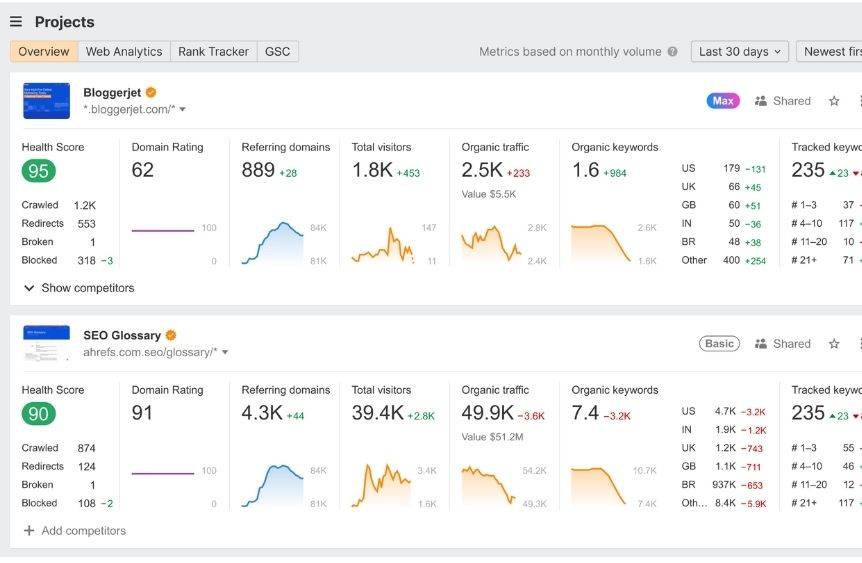
Ahrefs remains one of the most trusted tools for backlink analysis and competitive research for SEO professionals. This tool is now powered by AI insights that help SEO professionals understand why their competitors rank, which pages attract links, and where gaps exist.
Ahrefs has one of the largest backlink databases, with over 35 trillion external links, and it updates its index every 15 minutes. It is also the second most active web crawler after Google, crawling more than 7 billion pages daily. Around 64% of SEO professionals trust Ahrefs data, and 44% rely on its Domain Rating as a key SEO metric.
If you have ever wondered why a competitor outranks you despite having similar content, Ahrefs is usually where you find the answer. Here is what you can do with it:
- Backlink Analysis: See exactly who is linking to your competitors and from where. If a competitor is pulling in backlinks from industry publications you have never approached, Ahrefs surfaces that gap so you can act on it before anyone else does.
- Keyword Research: Find high-potential keywords across your niche with accurate search volume data, keyword difficulty scores, and traffic potential estimates so you prioritize terms that are actually worth targeting.
- Keyword Clustering: Group related keywords into logical topic clusters so your content strategy covers the full scope of a subject rather than targeting isolated terms one at a time.
- Search Intent Analysis: Understand what users actually want when they search a keyword, so your content matches their expectations from the first line to the last.
- Content Gap Analysis: Compare your website against competitors and instantly see which keywords they rank for that you do not. These gaps are your clearest opportunities for new content.
- Site Explorer: Dig into any website or URL to see its organic traffic, top ranking pages, and backlink profile. Use it on your own site to find your strongest pages and on competitors to understand exactly what is working for them.
- Rank Tracking: Monitor how your keywords move over time across different locations and devices so you always have a clear picture of your progress.
- Site Audit: Crawl your entire website for technical SEO issues such as broken links, missing tags, slow pages, and crawlability errors. This helps you fix the problems that silently drag down your rankings before they become a bigger issue.
- Brand Radar: Track how your brand appears across AI platforms like ChatGPT, Perplexity, Gemini, Copilot, and Google AI Overviews. It draws from a database of over 250 million prompts so you can see your AI Share of Voice, monitor which pages AI models cite when answering questions in your niche, and identify where competitors are getting mentioned and you are not. You can also track custom prompts to see how AI assistants talk about your brand for the exact questions your buyers ask, not just broad market-level queries.
You can use its AI features to assist you with clustering keywords, identifying search intent patterns, tracking your brand visibility across AI search platforms, and more to improve website rankings.
3. Surfer SEO
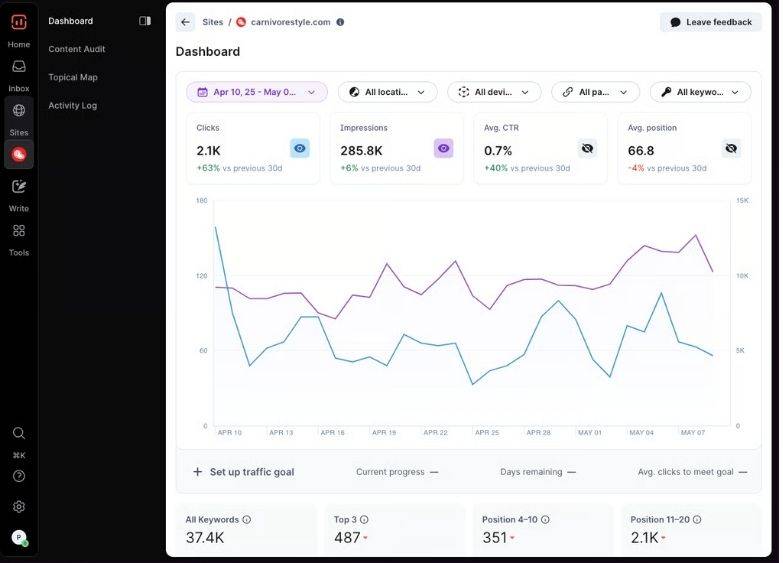
You cannot rank your websites without well-optimized content, and this is precisely what Surfer SEO helps you with. Surfer SEO analyzes all top-ranking pages for your target keywords and then uses AI to recommend ideal keyword usage, structure, and content depth. Think of it as a real-time guide that tells you exactly what a winning piece of content looks like for any given keyword, so you stop guessing and start writing with a clear target.
Most content fails to rank, not because it is badly written but because it is missing the right structure, depth, or terms that search engines are already rewarding. Surfer SEO fixes that before you even hit publish. Here is what you get with it:
- Content Editor: Write or paste your draft directly into Surfer’s editor and get a real-time content score as you type. It tells you which terms to add, how long your content should be, and how your structure compares to the top-ranking pages for your keyword.
- SERP Analyzer: See a detailed breakdown of every top-ranking page for your target keyword, including their word count, keyword density, number of headings, and page speed. You know exactly what the competition looks like before you start writing.
- Keyword Research: Discover clusters of related keywords that naturally belong together in a single piece of content so you cover a topic thoroughly rather than targeting one term in isolation.
- Audit Tool: Already have published content that is not performing? Run it through Surfer’s audit tool and get a prioritized list of improvements you can make today to give existing pages a ranking boost without starting from scratch.
- Topical Authority Mapping: Plan entire content strategies around topics rather than individual keywords so your website builds genuine authority in your niche over time rather than ranking for scattered terms.
- Surfer AI Writer: Give it a keyword and it researches, writes, and optimizes a fully structured long-form draft in around 20 minutes, with your tone of voice and custom brand knowledge built in.
- Surfy AI Assistant: Built directly into the Content Editor, Surfy helps you rephrase, expand, or rewrite sections on the fly without breaking your workflow or switching tools.
- AI Tracker: Track how your brand appears across AI search platforms like ChatGPT, Google AI Overviews, and Perplexity. Monitor competitor mentions and find content gaps so you can earn more AI citations as users shift away from traditional search.
- Auto-Optimize: Point Surfer at any existing page, and it automatically applies improvements based on what current top-ranking competitors are doing, so underperforming pages get a real shot at climbing without a full rewrite.
Whether you are writing a brand new article or refreshing an old one, Surfer SEO makes sure every piece of content you publish has a real shot at ranking. It takes the guesswork out of optimization and replaces it with a clear, data-backed target you can actually hit.
4. ChatGPT
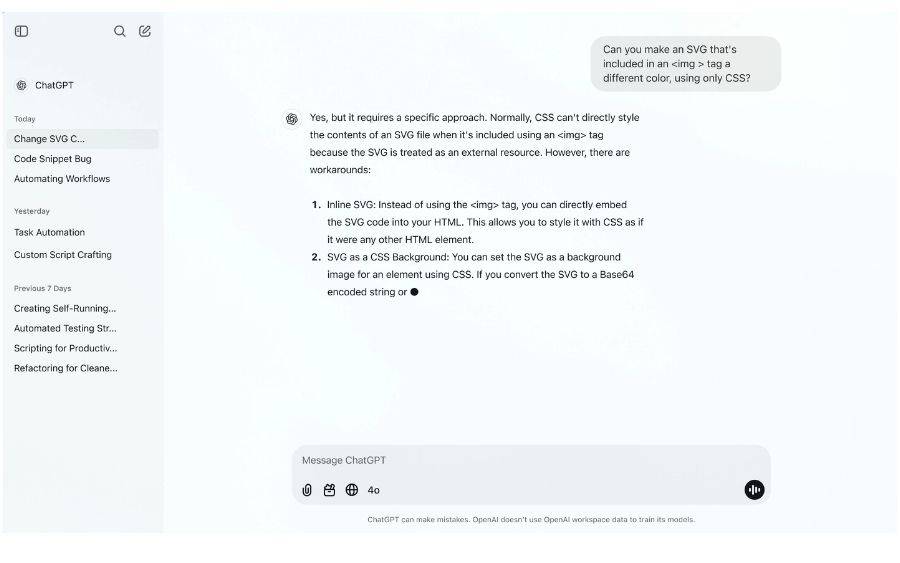
ChatGPT has become a flexible AI engine within most SEO workflows. Beyond content generation, SEO professionals are using it for strategic keyword clustering, search intent analysis, automation scripts, and even building internal GPT tools.
What separates how top SEO professionals use ChatGPT from how most people use it is intention. They are not just asking it to write blog posts. They are building systems around it that save hours every single week. Here is what that looks like in practice:
- Content Generation: Draft articles, meta descriptions, title tags, FAQs, and product descriptions at scale. Use it to produce strong first drafts that you then refine with your own expertise and run through tools like Surfer SEO for optimization.
- Keyword Clustering: Feed ChatGPT a list of raw keywords and ask it to group them by topic, intent, or funnel stage. What used to take hours in a spreadsheet now takes minutes, and the output is clean enough to build a content calendar around.
- Search Intent Analysis: Paste a list of keywords and ask ChatGPT to identify the intent behind each one. Informational, navigational, commercial, or transactional. Knowing this upfront shapes everything from your content format to your call to action.
- Content Briefs: Generate detailed content briefs for writers that include target keywords, suggested headings, tone guidelines, competitor angles to beat, and word count targets. Your writers spend less time figuring out what to write and more time actually writing it.
- Deep Research: Ask ChatGPT to autonomously research a topic across dozens of sources and deliver a structured, analyst-style report in one go. SEO professionals are using this for competitor audits, topical research, and identifying content gaps that would otherwise take an entire afternoon to map manually.
- Automation Scripts: Use ChatGPT to write Python or JavaScript scripts that automate repetitive SEO tasks like bulk meta description generation, internal linking suggestions, or data formatting from crawl exports.
- Regex Generation: Ask ChatGPT to write regular expressions for filtering data in Google Search Console, Excel, or your log file analysis tool. Something like pulling all question-based queries or isolating URLs from a specific subfolder — tasks that used to require a developer or a lot of trial and error.
- Schema Markup Generation: Ask ChatGPT to generate structured data markup for your pages. It handles the technical formatting so you can implement schema without needing a developer for every single page.
- Custom GPT Tools: Build a custom GPT trained on your own brand guidelines and past content, so every new piece your team produces stays on-brand without constant manual oversight.
The real power of ChatGPT in an SEO workflow is not any single feature. It is the fact that it bends to whatever you need it to do. Once you start treating it as a thinking partner rather than just a writing assistant, the way you work changes completely.
5. Screaming Frog SEO Spider
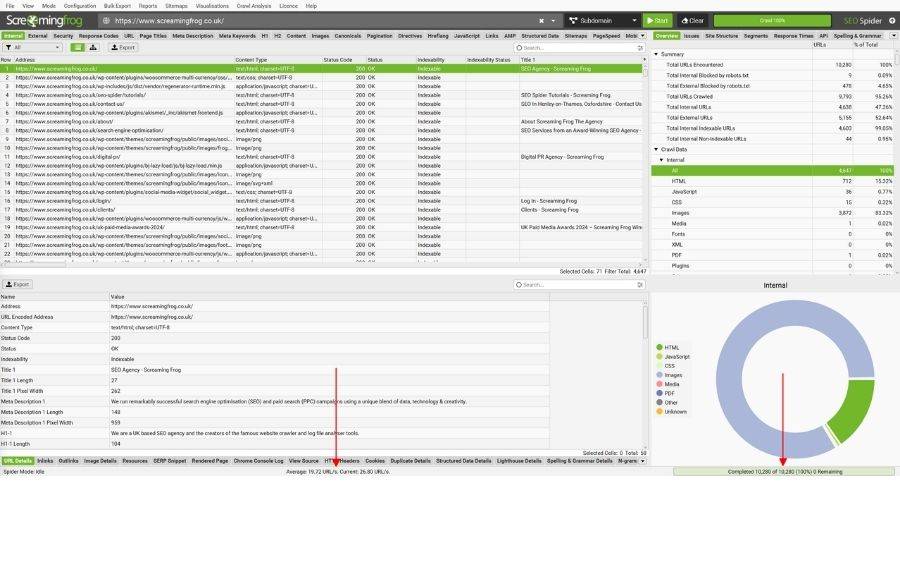
Screaming Frog has been a technical SEO staple for years, and its newer AI integrations have made an already powerful tool considerably sharper. As an SEO professional, you can use it to crawl websites and identify otherwise-hidden issues such as broken links, duplicate content, and indexing problems. If your rankings have plateaued despite solid content and backlinks, Screaming Frog is often where you find the technical culprit hiding in plain sight.
Most ranking problems that cannot be explained by content quality or backlink gaps have a technical root cause. Screaming Frog is built to find exactly that. Here is what it can surface for you:
- Full Site Crawl: Crawl any website the same way Google does and get a complete picture of every URL, status code, redirect chain, and page element across your entire domain. Nothing stays hidden.
- Broken Link Detection: Identify every broken internal and external link across your website in one crawl. Broken links bleed link equity and frustrate users, and Screaming Frog finds all of them before Google does.
- Duplicate Content Finder: Spot pages with identical or near-identical content that could be confusing search engines and splitting your ranking potential across multiple URLs instead of concentrating it on one.
- Redirect Audit: Map out every redirect chain and loop on your website. Long or broken redirect chains slow down crawling and dilute link equity, and this tool shows you exactly where to clean them up.
- Meta Data Analysis: Review every page’s title tag, meta description, and heading structure in one place. Find missing, duplicate, or oversized tags that could be quietly costing you clicks in the search results.
- Indexability Check: See which pages on your website are blocked from being indexed and why. Whether it is a rogue noindex tag, a disallow in your robots.txt, or a canonical pointing the wrong way, Screaming Frog flags it immediately.
- JavaScript Rendering: Crawl your website the way Google actually renders it, not just the raw HTML. If your site relies on JavaScript to load content, links, or navigation, this ensures none of that gets missed during the audit.
- Page Speed Integration: Connect Screaming Frog with Google PageSpeed Insights to pull performance scores for every page during your crawl, so you identify slow pages at scale without checking them one by one.
- Semantic Similarity Analysis: Instead of relying on exact keyword matches, Screaming Frog now evaluates how closely pages align with a specific topic or query based on actual meaning and context, even when the phrasing differs. This surfaces content cannibalization and off-topic pages that traditional crawlers would never catch, and pairs with a content cluster visualisation that shows how your pages relate to each other semantically.
- AI-Generated Metadata: Use its AI integrations with OpenAI, Gemini, Anthropic, and Ollama to automatically generate title tags, meta descriptions, and image alt text for pages that are missing them, saving significant time on large websites where writing metadata manually is simply not practical.
- XML Sitemap Generation: Once your crawl is clean, use Screaming Frog to generate an accurate XML sitemap that reflects only the pages you actually want Google to index.
Technical SEO is often the least glamorous part of the job, but it is frequently the most impactful. Screaming Frog makes sure that every piece of content you create and every backlink you earn lands on a website that search engines can crawl, understand, and rank without running into obstacles you did not know were there.
6. Clearscope
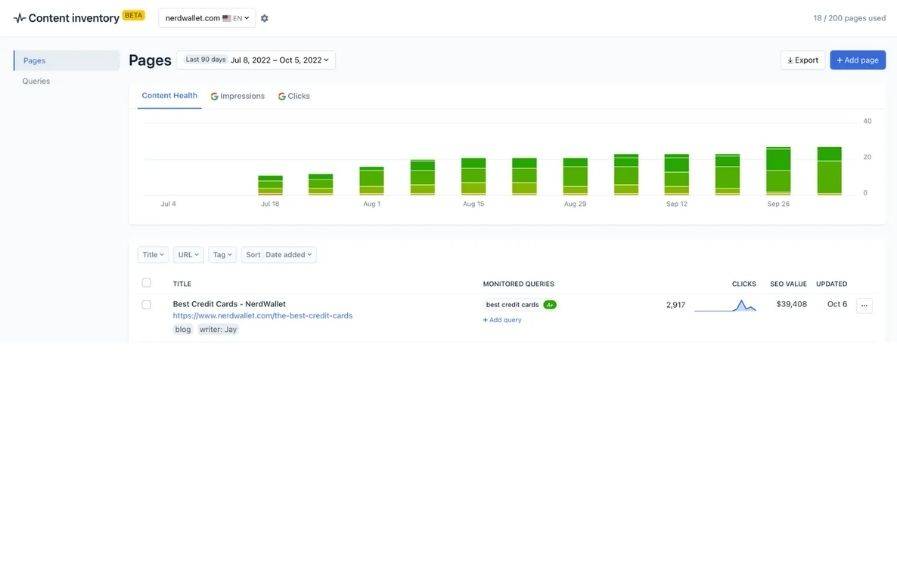
It is a well-known premium content optimization tool built around semantic analysis. While Clearscope is not a new addition to elite SEOs’ toolkits, its AI updates have made it a must-have for every SEO professional.
The way search engines evaluate content has changed significantly. Stuffing a keyword in every other sentence stopped working a long time ago. What Google rewards today is content that demonstrates a thorough, authoritative understanding of a topic, and Clearscope is built specifically to help you get there. Here is what it gives you:
- Content Grading: Every piece of content gets a real-time grade as you write or edit. The grade reflects how well your content covers the topic semantically, giving you a clear and measurable target to hit before you publish.
- Term Recommendations: Clearscope analyzes the top-ranking pages for your keyword and surfaces the terms and concepts that appear most frequently among them. These are not just synonyms. They are the ideas and subtopics that search engines associate with genuine expertise on the subject.
- Content Editor: Write or paste your draft directly into the Clearscope editor and watch your grade update in real time as you add recommended terms and improve your coverage. You always know exactly how close you are to a publish-ready piece.
- Draft with AI: A guided multi-step process that takes you from a target keyword to a structured, optimized first draft inside Clearscope’s own workflow. You set the search intent, content format, and tone, and it generates a draft that is already aligned with what is ranking, so you spend your time refining rather than starting from a blank page.
- Search Intent Analysis: Rather than labelling a query as simply informational or navigational, Clearscope now translates intent into human-readable insights that explain exactly what the user is trying to accomplish, so you can brief writers more precisely and position your content as the clearest answer to the real question behind the search.
- Keyword Research: Discover related keywords and their monthly search volumes directly within Clearscope so you can identify additional terms worth targeting while you are already deep in the optimization process.
- Content Inventory Reports: Audit your existing published content to find pages that have drifted in relevance over time. These reports show you which pages need a refresh and what specific improvements would bring them back to a competitive standard.
- AI Visibility Tracking: Track how your content is being discovered and cited across both traditional search engines and AI-first platforms like ChatGPT and Gemini, so you are not flying blind on whether your content is showing up in the places where your audience is increasingly going for answers.
- Google Docs and WordPress Integration: Clearscope connects directly with Google Docs and WordPress so your writers can optimize content inside the tools they already use without copying and pasting between platforms.
- Team Collaboration: Share content reports and graded drafts with writers, editors, and clients in a format that is easy to understand, even for people who are not deep in SEO. Everyone on the team works from the same standard.
You can use Clearscope to refine high-value pages where quality matters the most. It helps your content cover a topic with the kind of depth and semantic breadth that search engines now associate with genuine expertise, which matters more than keyword density ever did. If you are serious about content quality and not just content volume, Clearscope is the tool that keeps your standards consistently high across everything you publish.
7. Frase
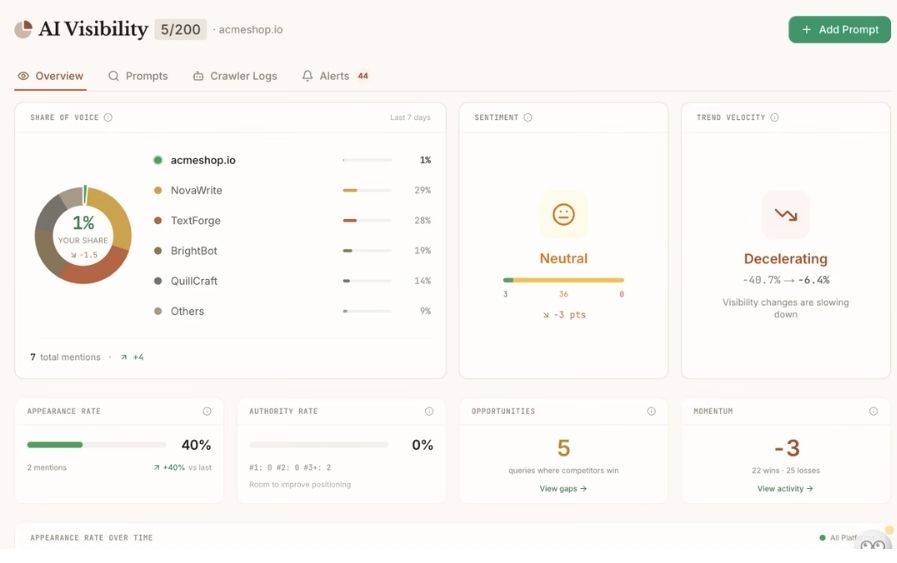
Frase is another excellent AI tool that deserves a place in your SEO kit. If you handle bulk content across websites, Frase can streamline content research and briefing. The tool uses AI to analyze search results and generate structured outlines based on what competitors are covering. In practice, this means you spend less time opening ten browser tabs to read competitor articles and more time actually writing something better than all of them.
For anyone managing content at scale, the research and briefing stage is often where the most time gets lost. Frase compresses that stage significantly without cutting corners on quality. Here is what it brings to your workflow:
- AI Content Briefs: Generate comprehensive content briefs in minutes based on what is already ranking for your target keyword. Each brief includes suggested headings, key topics to cover, questions to answer, and competitor insights so your writers have everything they need before they type a single word.
- SERP Research Panel: See a side-by-side breakdown of the top-ranking pages for your keyword without leaving Frase. Their headings, word counts, and key topics are pulled together automatically so you can study the competition and plan your angle in one place.
- AI Document Editor: Write your content directly inside Frase and use its AI writing assistant to expand sections, rewrite paragraphs, or fill in gaps as you go. You stay in one tab from research all the way through to a finished draft.
- Content Scoring: As you write, Frase scores your content against the top-ranking pages for your keyword. The score reflects how well you are covering the topic compared to competitors so you always know whether your draft is ready to compete or still needs work.
- GEO Optimization: Beyond ranking on Google, Frase now simultaneously optimizes your content to be cited by AI search engines like ChatGPT, Perplexity, and Google AI Overviews. As more of your audience gets answers directly from AI platforms without ever clicking a traditional search result, showing up as a cited source is becoming just as important as ranking on page one.
- Question Research: Frase pulls the most common questions people are asking about your topic from sources like Google’s People Also Ask and other forums. These questions become natural subheadings, FAQ sections, and angles that make your content more comprehensive than what is already ranking.
- Content Optimization for Existing Pages: Already have published content that has lost ground in rankings? Run it through Frase to see what topics and terms the current top-ranking pages are covering that your content is missing. A targeted refresh based on this data can bring underperforming pages back to life faster than writing something new from scratch.
- AI Visibility Tracking: Monitor your brand across Google and multiple AI platforms, spot declining pages before they cost you traffic, and surface opportunities with estimated traffic impact so you always know where you stand in both traditional search and AI-generated answers.
- Frase AI Agent: The AI Agent executes complete workflows based on natural language instructions. You can tell it to find your top content opportunity, research the topic, build an optimized outline, write a draft, and add it to your review queue, all while you focus on something else. For teams producing content at volume, this is the difference between managing a content operation and being consumed by one.
- Team Workflow Management: Assign briefs to writers, track content status, and manage multiple projects from inside Frase. For agencies and in-house teams handling large content volumes, this keeps everyone aligned without needing a separate project management tool just for content.
Whether you are a solo SEO managing several client websites or part of a larger team producing content at volume, Frase removes the most time-consuming parts of the research process and replaces them with a system that is faster, more consistent, and strategically sharper every single time.
8. Respona
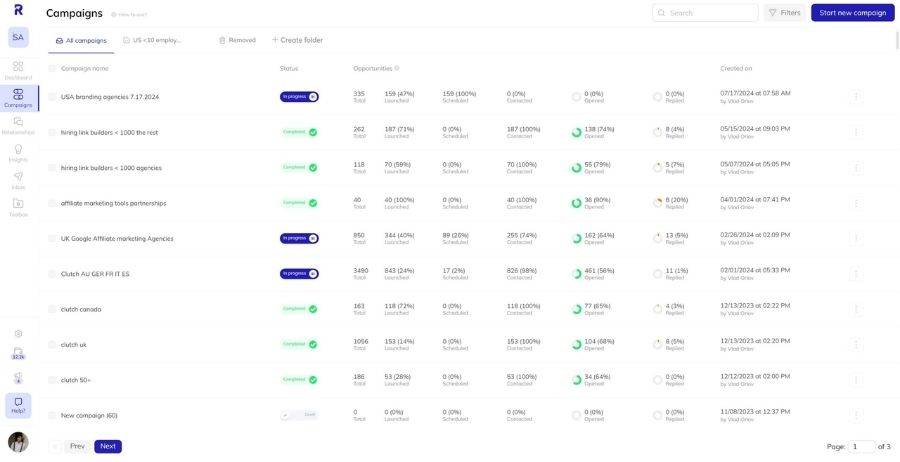
Respona focuses on one of the most time-consuming parts of SEO — link building and outreach. It uses AI to find relevant outreach opportunities, personalize emails, and manage campaigns. Most top SEO professionals use it to scale their link acquisition efforts without sacrificing relevance.
Link building at scale has always had a quality problem. The more you try to automate it, the more generic and ineffective your outreach becomes. Respona solves that tension by combining automation with genuine personalization so your campaigns feel human even when they are running at volume. Here is what it does:
- Opportunity Discovery: Respona automatically finds relevant link-building opportunities based on your target keywords and niche. It searches the web for blogs, publications, and resource pages that are a natural fit for your content, so you are not wasting time manually hunting for prospects.
- Contact Finding: Once Respona identifies a target website, it finds the right contact person and their verified email address automatically, checking across multiple sources. No more digging through About pages or guessing at info@ addresses that nobody reads.
- AI Email Personalization: Respona uses AI to personalize each outreach email based on the specific page or article you are pitching to. Every email references something real and relevant about the recipient’s content, so it reads like a genuine outreach rather than a mass blast. You can also train the AI on examples of your own past personalizations so it adapts to your voice rather than sounding like every other cold email in the inbox.
- Automated Follow Ups: Set follow-up sequences that trigger automatically if a prospect does not respond. You stay top of mind without manually tracking who replied and who did not across a spreadsheet that grows harder to manage every week.
- Campaign Management: Run multiple outreach campaigns simultaneously from one dashboard. Track open rates, reply rates, and link placements across every campaign so you always know what is working and where to improve.
- AI Visibility Link Building: Beyond ranking on Google, Respona now helps you earn backlinks specifically on the pages that AI platforms like ChatGPT, Perplexity, and Gemini pull from when generating answers. As LLMs increasingly cite the same high-authority sources repeatedly, getting your brand mentioned on those pages becomes as strategically valuable as a traditional backlink.
- Podcast Outreach: Beyond traditional link building, Respona can help you identify podcast booking opportunities within your niche. Getting featured as a guest on relevant podcasts builds both backlinks and brand authority at the same time.
- Integration with Ahrefs and Semrush: Connect Respona directly with your existing SEO tools to pull link prospects from competitor backlink profiles and content gap reports. Your outreach targets come straight from data rather than guesswork.
- Performance Analytics: See detailed reporting on every campaign, including which email templates perform best, which niches respond most, and how your link acquisition rate trends over time. You refine your approach with every campaign rather than repeating the same mistakes.
The biggest benefit of this AI tool is its efficiency. What once meant hours of hunting for contact emails, personalizing cold pitches, and tracking follow-ups manually can now run as a streamlined campaign in far less time and with noticeably sharper targeting. If link building has always felt like the part of SEO that takes the most effort for the least predictable return, Respona is the tool that finally makes it feel manageable and scalable at the same time.
9. Alli AI
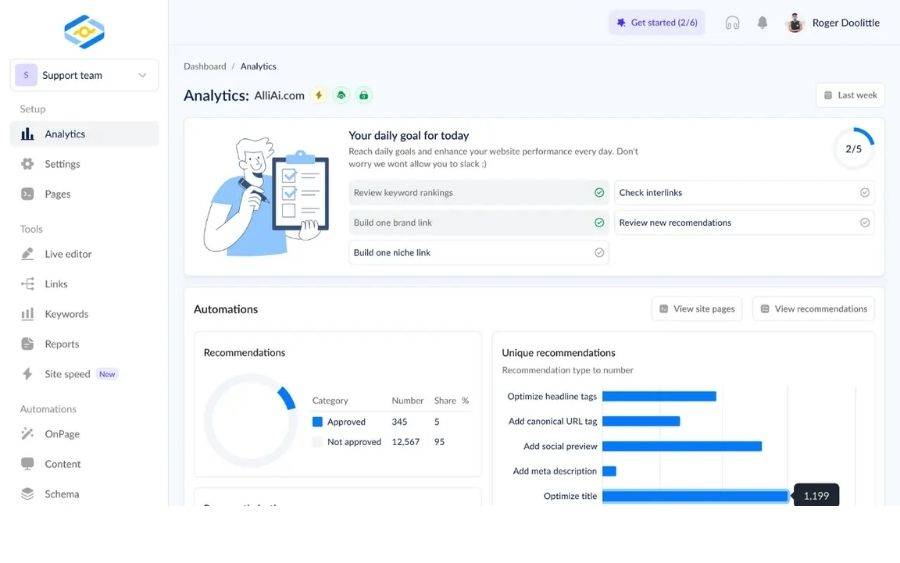
Most SEO tools hand you a to-do list and walk away. Alli AI is different because it actually completes the work, deploying technical fixes directly across your website without you having to loop in a developer for every change. You can use it to implement optimizations at scale without relying on developers. It notably reduces the turnaround time, ensuring that technical improvements are applied consistently across larger websites.
For anyone who has ever sat on a list of technical SEO fixes for weeks waiting for developer availability, Alli AI removes that bottleneck completely. Here is what it can do for you:
- Live Editor: Make on-page SEO changes directly to any element of your website through Alli AI’s visual editor without touching the underlying code. Title tags, headings, meta descriptions, and body content can all be updated instantly from one place.
- Bulk Onpage Optimization: Apply SEO changes across hundreds or thousands of pages simultaneously. Whether you need to update title tag structures, add missing meta descriptions, or adjust heading hierarchies site-wide, Alli AI handles it in one action rather than page by page.
- Automated SEO Rules: Set rules that automatically apply specific optimizations whenever new pages are published. Your SEO standards get enforced consistently across your entire website without you having to manually review every new piece of content that goes live.
- Code Change Deployment: Alli AI can push changes like schema markup, canonical tags, and hreflang attributes directly to your website without requiring a developer to write or deploy a single line of code. What used to sit in a backlog for weeks gets done the same day.
- Internal Linking Automation: Alli AI scans your existing content, identifies contextually relevant linking opportunities between pages, and deploys the internal links directly to your site. Strong internal linking improves crawlability and distributes page authority more effectively, and this feature handles it systematically at scale rather than leaving it to guesswork.
- A/B Testing for SEO: Test different versions of title tags and meta descriptions across your pages to see which variations drive better click-through rates from search results. You make decisions based on real performance data rather than assumptions.
- Site Speed Optimization: Alli AI identifies and applies performance improvements that directly impact your Core Web Vitals scores. Faster pages rank better and convert better, and this tool helps you get there without a technical deep dive every time.
- AI Crawler Access: Many modern websites built on React, Vue, or Next.js appear completely blank to AI platforms like ChatGPT and Perplexity because those crawlers cannot render JavaScript the way a browser does. Alli AI fixes this by pre-rendering HTML specifically for AI crawlers and automatically whitelisting over 50 AI bots so your content actually gets read and cited by the platforms where more and more of your audience is now going for answers.
- Multi Site Management: Manage SEO across multiple websites from a single dashboard. For agencies or businesses running several domains, this means consistent optimization standards applied everywhere without duplicating effort across each individual site.
- Keyword Rank Tracking: Monitor how your target keywords perform over time directly within Alli AI so you can connect the technical changes you are making to real movement in your rankings and adjust your approach accordingly.
- CMS Compatibility: Alli AI works across all major content management systems including WordPress, Shopify, Wix, and Webflow so you are not locked into a specific platform to take advantage of its automation capabilities.
If technical SEO has always felt like a constant negotiation between what needs to be done and when a developer can actually do it, Alli AI changes that dynamic entirely. It puts the execution back in your hands and makes sure that no optimization sits waiting on someone else’s schedule.
10. n8n
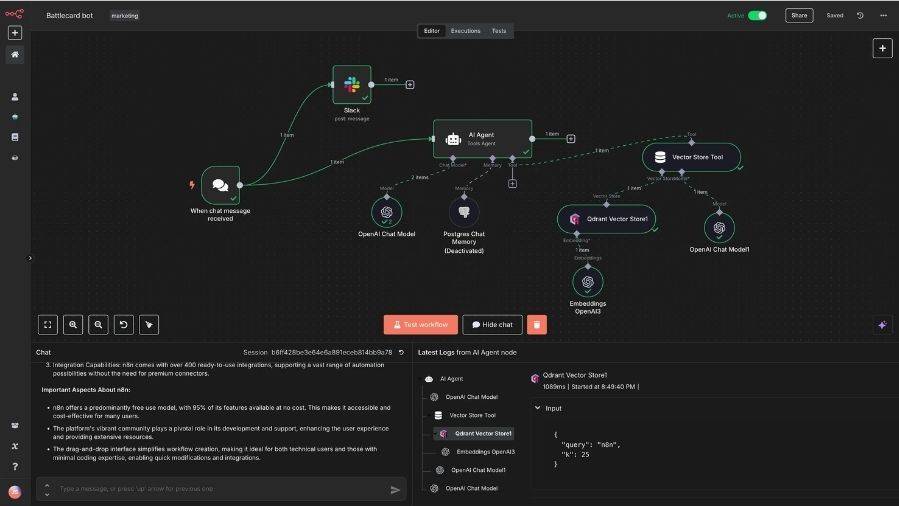
n8n represents a massive shift toward AI-driven SEO systems. It allows SEOs to build automated workflows that connect multiple tools. For example, the top SEOs are already using it to scrape data, analyze it, generate insights, and trigger actions based on the findings. It has a steeper learning curve than most tools on this list, but the payoff is worth the investment. Once you build your first working workflow, the logic becomes intuitive quickly.
Most SEO professionals are still spending hours every week on tasks that a well-built workflow could handle automatically. n8n is the tool that lets you build those workflows without needing a software engineering background. Here is what you can do with it:
- Multi Tool Workflow Automation: Connect tools like Ahrefs, Semrush, Screaming Frog, Google Search Console, and ChatGPT into a single automated pipeline. Data flows between them automatically so you are not manually exporting from one platform and importing into another every single time.
- Automated Rank Tracking Alerts: Build a workflow that pulls your keyword ranking data daily, compares it against the previous week, and sends you an alert only when a significant drop or gain occurs. You stay informed without logging into a dashboard every morning to check manually.
- Content Opportunity Workflows: Set up a workflow that monitors competitor websites for new content, analyzes the topics they are covering, and flags opportunities for you to respond with your own content before the window closes.
- Automated Reporting: Build workflows that pull data from multiple SEO tools, compile it into a formatted report, and deliver it to your inbox or your client’s inbox on a schedule. What used to take hours of manual data gathering every month runs on its own every time.
- Lead and Backlink Monitoring: Create workflows that monitor your backlink profile for lost or gained links and trigger an immediate notification so you can act on changes in real time rather than discovering them weeks later during a routine audit.
- AI Powered Content Pipelines: Connect n8n with ChatGPT to build workflows that take a keyword input, generate a content brief, score it against competitor pages, and deliver a ready-to-use document to your team automatically. The entire research and briefing process runs without manual intervention.
- Multi-Agent AI Workflows: Chain multiple AI models together inside a single pipeline so each handles what it does best. Use Perplexity to research the topic, Claude to build the outline, GPT-4 to write the draft, and a separate model to handle SEO scoring, all sequenced automatically without any manual handoff between steps. This is where n8n moves from automation tool to something closer to an autonomous content operation.
- Technical SEO Automation: Schedule regular crawls, pull the results into a spreadsheet automatically, and trigger alerts when new technical issues appear. Your website gets monitored continuously rather than only when you remember to run an audit.
- CRM and Outreach Integration: Connect your SEO prospecting data directly to outreach tools like Respona or your CRM so new link building opportunities flow straight into your campaigns without anyone having to copy and paste a single contact detail.
- Custom Triggers and Conditions: Build workflows with specific conditions that determine when and how actions fire. For example, only trigger a content brief when a keyword hits a certain search volume threshold, or only send an alert when a ranking drops by more than five positions.
You should use it to eliminate repetitive tasks and create scalable processes. We recommend exploring this automation tool if you want to move your SEO game from manual execution to a systemized, automated operation that runs continuously in the background. The professionals who invest time in building these workflows today are the ones who will have a compounding advantage over everyone still doing things manually tomorrow.
From Research to Published Content: A Real SEO Workflow
SEO is not just about using tools separately, but about combining them into a clear workflow that moves content from idea to ranking. Start by fixing technical issues, then research keywords and competitors to build a strong content plan before writing. After publishing, focus on improving quality, building backlinks, and automating the process to scale results efficiently.
Conclusion
AI tools are evolving faster than most can keep up with. And if you’re an SEO professional, you cannot execute your SEO tasks faster or at scale without the right AI tools. Since the market now offers numerous AI tools, we’ve handpicked the top 10 options most top SEO professionals use.
Whether you are just starting out or already running large-scale SEO campaigns, at least a few of these tools will fit directly into your existing workflow and start paying off faster than you expect. You may find free trials for a few tools, while others require paid plans to access advanced AI features. So, choose a few tools from the list and start deep diving.
If you want help building an SEO strategy around these tools or figuring out which ones make sense for your business, the B3NET team is happy to walk you through it. Reach out to us for a free consultation.