
Twenty-seven years is a long time, especially if you’ve built a solid digital identity for your business.
But all that blood and sweat now seems to have gone to waste, with half of your traffic lost overnight.
So, what happened?
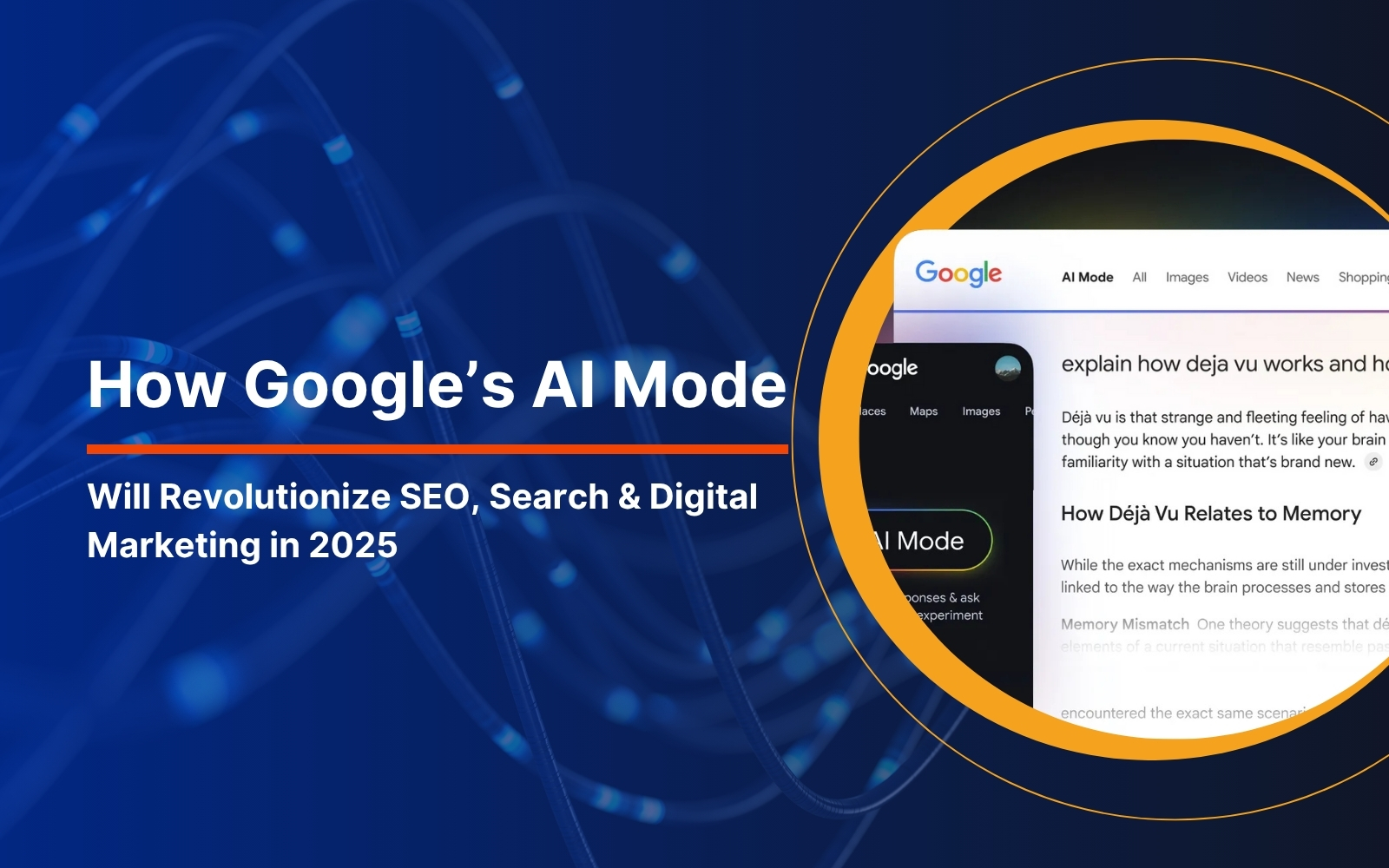
Google officially joined the AI bandwagon on May 21, 2025, leaving several online publishers to take the gut punch. According to a Wall Street Journal report, news sites were the first affected.
Business Insider saw a dip of at least 55% from 2022 to 2025, closely followed by Huffington and the Washington Post (50% drop).
It was evident that the glorious “Google search” era had come to a standstill. No more browsing articles to find information. No more cross-checking information for relevance.
Google’s AI Overview now delivers direct answers. Bot‑style summaries eliminate blue links and cut click rates dramatically, leading to fewer referrals.
In short, traditional SEO is headed for the emergency room.
As a leading digital marketing agency, we thought, what better time than now to find the best way forward? After all, we owe it to the future of SEO, digital marketing, and our esteemed clients. So, here’s what we did.
- We ran hundreds of searches for different intents- navigational, transactional, and commercial using Google’s AI mode for both mobile and desktop.
- We tracked critical metrics, like frequency of citations, use of thumbnails, word count, blue link prevalence, and local intent signals.
And here’s our two cents for your business to make the best out of Google’s AI Mode in 2025.
What Exactly Is Google’s AI Mode?
Google’s I/O 2025, which had the AI mode rolled out, is powered by Gemini 2.5 (both Flash and Pro). The main function of Google’s AI mode is to break otherwise complex queries into digestible threads and support parallel searches for neatly composed user-centric answers.
The best part? Google’s highly conversational AI uses multimodal communication (text and visuals). It also leaves room for ads and affiliate-style product panels. Deep Think and Live search are in the offing.
Here are the key changes that Google’s AI mode brings to the table:
- Increased focus on local intent: Search queries that aren’t location-specific, like “online courses,” now return information with location context.
- Longest outputs for informational and commercial keywords: The information produced for commercial and informational keywords consisted largely of blog posts. However, the range of output varies from 500 to 2000 words and from 12 to 50 citations in some cases.
- Page 2 results are now making way as citations: There are some queries that don’t produce AI Mode output but have the blue links. Take Twitter posts, for example, where the URLs previously present on Page 2 are now displayed on the first page. Also, page 2 URLs with keywords that offer longer citations are now being displayed.
- Clever thumbnails: Thumbnail images are now cropped down to 82/82 pixels. Additionally, URLs minus thumbnails remain as-is unless Google finds the right “usable image.”
- The rift between desktop and mobile: The mobile AI mode offers ~50% fewer citations compared to desktop searches, which is a step ahead for small-screen optimization.
Where Does Google’s New AI Mode Leave You As a Business?
Undeniably, Google’s AI mode is rewriting the rules of SEO. And that means businesses are now up against a great learning curve to optimize and integrate tech for AI mode citations.
For instance, businesses struggling to get to Page 1 from Page 2 now have a fighting chance.
Thanks to AI mode, the content, the citations, the topic, and everything else are being revamped to feed answers to users- something that Google prioritizes above everything else.
But is everything good about Google’s AI mode?
There’s no easy answer.
Drilling down to the specifics, bluelinks are reportedly fading fast.
According to Semrush, the AI overview had already caused desktop CTRs to dip. Now, the AI mode is making it even harder.
More than 50% of organic traffic has declined, a major blow to revenue-driven publishers. And Google’s AI runs the risk of what the industry now calls “AI hallucination”.
The NY Post reported how AI overviews recommended adding glue to pizza sauce to help the cheese stick better. Shocking, right?
In another instance, Google’s AI mode identified a fake phrase (“You can’t lick a badger twice”) as a correct idiom.
These so-called “hallucinations” are further compounded by the AI mode, significantly doing away with reputable sources. But that doesn’t stop company-owned AI answers from ruling the SERPs. So, you have one more opponent to fight it out besides natural competitors in your niche.
Now comes the million-dollar question: Is there a way out of this? Luckily, AEO is the answer.
Decoding Answer Engine Optimization (AEO)
With ChatGPT in the picture, a good number of users have now ditched the traditional way to search on Google. And that’s where AEO gains relevance. It simply means that, as a business, you can do a lot better by optimizing your web content to appear in AI results and overviews, and not just for Google’s SERPs alone.
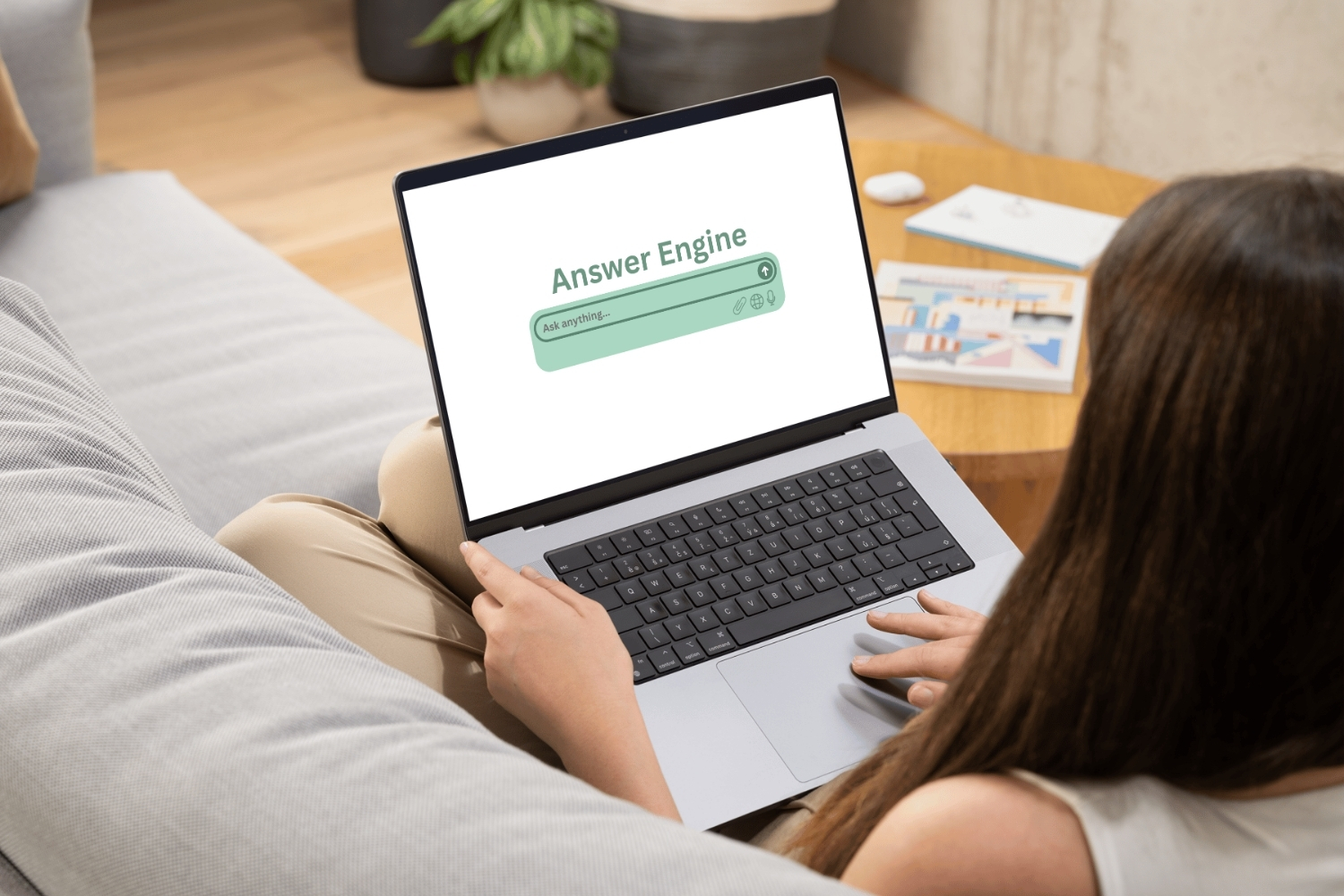
However, AEO, contrary to what most people think, is not very different from SEO. Where SEO targets a better ranking across search engines, AEO aims at optimizing content for AI engines.
That’s why many experts believe that AEO should be treated as a subset of your main SEO strategy.
Enough theory! Now, let’s jump to some action with real-time AEO tactics for 2025.
Optimize content for voice searches
While businesses are focused on optimizing content for featured snippets, voice searches demand attention, too. Similar to text searches, voice searches come formatted as complete sentences, especially questions.
Usually, they begin with any of the “Five Ws,” i.e., how, where, why, when, and what.
So, the easiest optimization approach is to target long-tail keywords. That way, even if it isn’t a voice search, your content would appear in an AI search when one asks full questions using an AI research tool.
Aim to win featured snippets
By now, we’ve all seen the blurbs that top the organic results for any Google search. So, it’s only obvious to optimize your web content to get featured across these snippets. But honestly, there’s no surefire formula to win these coveted spaces, especially because Google’s AI mode is still evolving.
However, what has worked for most brands is short, crisp content that directly answers user queries without beating around the bush.
Understand the search intent
Prioritizing search intent is nothing new if you already have a functional SEO strategy for your business. It is the primary reason behind a particular search query. For example, a user searches for “tips to prevent termites.” The search intent behind this would be that the user must have been dealing with termites at home or office and wants to get rid of them.
The same logic goes for AEO. Before you target specific keywords or queries for your site, you should consider why people search for them. This will help you tailor the right kind of content that AI tools will actually use and rank for.
Get listed on business directories
With traditional SEO, you could still opt out of listing your business in an online directory. But with AEO, that is no longer an option. This is because when a user uses an AI tool to recommend businesses matching their need, tools like ChatGPT often pull information from online directories like GoogleMyBusiness. So, getting listed in a business directory doubles your chances of appearing in answer engine responses.
Some of the other must-dos to boost your AEO include:
- Extended use of structured and authoritative content
- Using bulleted lists and schema for Q&As and FAQs
- Creating topical authority using a mix of content formats, like blogs, podcasts, and social media posts
- Including relevant citations to validate information, as Google prioritizes credible sources
- Consistent use of conversational tone for Q&A that bots mimic and reward
- Monitoring all brand mentions and citations using LLM trackers (like ZipTie, Peec)
- Use UTM-coded campaigns to measure referral impact
- Prioritizing conversions and other engagement metrics, and not just visits
- Consider investing in paid ads for Performance Max, as they are now part of AI searches
- Ditch over-reliance on Google and take ownership of first-party relationships using apps and email lists
Google’s AI Mode is Here To Stay
SEO isn’t dead. Instead, it’s morphing beautifully into AI‑powered multi‑channel growth. So, a rewarding future awaits businesses that can structure and optimize their web content for AI tools and bots, establish topical authority across mediums, prioritize conversions, and own all stages of customer relationships.
But things are easier said than done. And for most businesses, adapting to this answer-first digital economy can be a puzzle. If that’s the case with you, consider partnering with a new-age, agile, conversion-focused digital marketing agency.
Remember, Google’s AI mode is not just a new feature; it’s a marvelous shift, a revolutionary approach to changing the game of search forever. The faster you adapt, the better you thrive!
How about joining a no-obligation AEO strategy call with us?
Reach us to get started.