For many years, SEO revolved around keywords. Businesses looked for search terms with high value and inserted them naturally throughout the content, expecting to rank higher in the Search Engine Results Page.
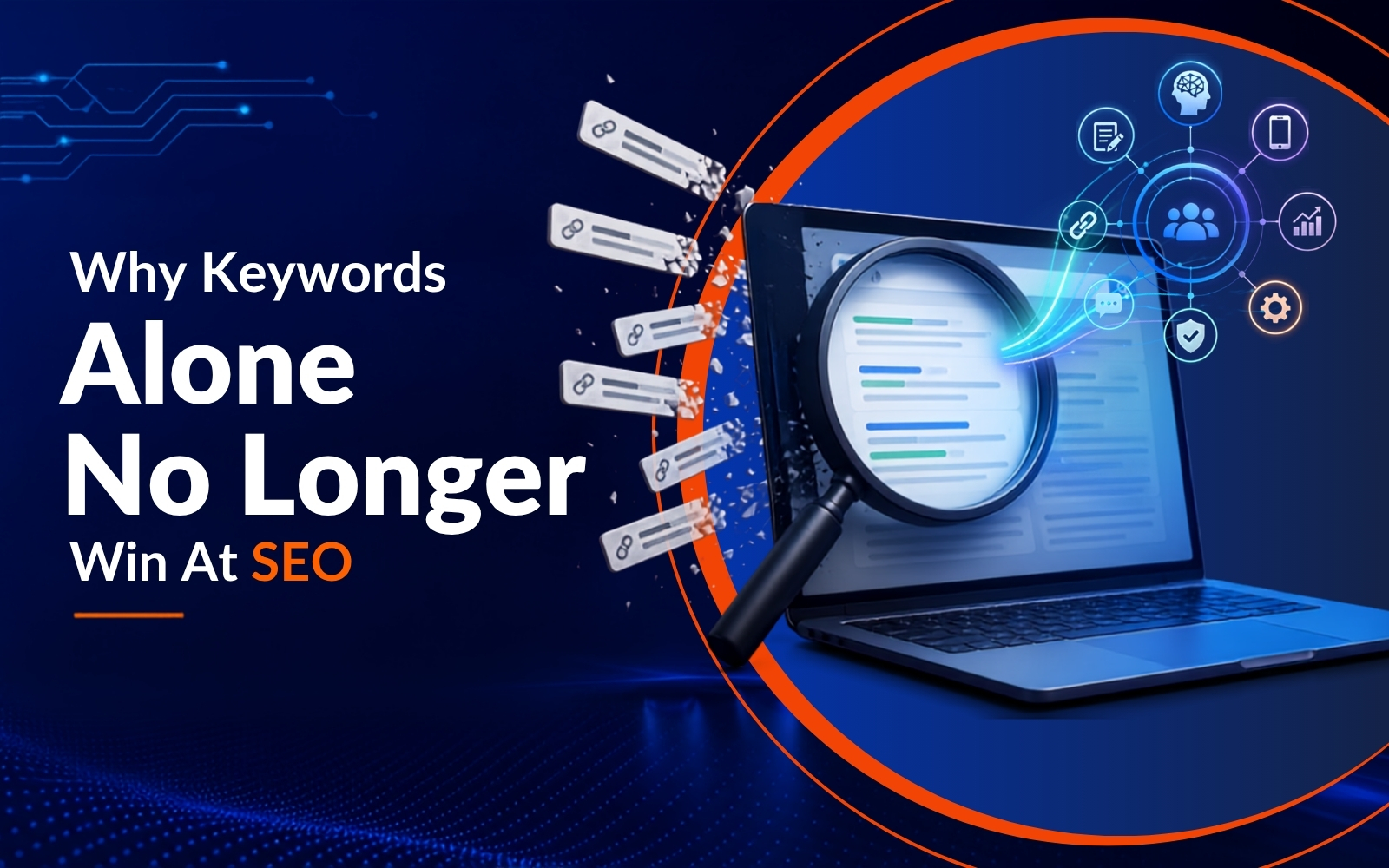
Keywords still remain an important aspect of SEO, but today relying solely on them is no longer sufficient.
Search engines have become far more sophisticated. They now examine the overall website quality, the search intent, user engagement, topical expertise, and multiple other ranking signals before deciding which pages deserve to appear at the top.
At our agency, we have worked with businesses across diverse industries, and one pattern has always remained consistent. Websites focused on keyword density rarely ever achieved long-term success. Well, on the other hand, those businesses investing in creating valuable content and building authority continue to outperform their competitors, even when they target the same keywords.
Keywords Still Matter, But They’re Only One Piece of the Puzzle
If you had read this a couple of years ago, you’d have been surprised, right?
Keywords still tell search engines what the content is all about; they still help match your page with relevant search queries, and remain the foundation of every SEO strategy.
However, the algorithm today goes far beyond matching exact words. Search engines understand context, synonyms, relationships between topics, and user intent. A page can rank well without repeating the same keyword dozens of times. This is because modern search engines recognize whether the content answers the question genuinely.
We have seen many businesses invest heavily in keywords, but they end up overlooking actual experience visitors have on their website. They do attract traffic but not conversions.
Today, the foremost goal is to create the most helpful resource around the topic.
Search Intent Has Become the Real Ranking Factor
This is one of the biggest shifts in modern SEO: the importance of search intent.
When you search online, you’re not looking for keywords. You’re looking for products, services, or answers. Search engines prioritize the pages that satisfy that intent.
For instance, if someone is searching for the “best CRM software for small businesses,” they expect features, recommendations, comparisons, and pricing, not a homepage stuffed with the phrase “best CRM software.”
Before creating content for an SEO campaign, we ask a few key questions:
- What problem is the user trying to solve?
- What information are they expecting?
- What action are they likely to take next?
- How can we provide a better answer than existing results?
Answering these questions produces content that naturally fits keywords.
Topical Authority Outweighs Individual Keywords
Ranking for a single keyword is not the ultimate goal anymore. Websites that demonstrate expertise across an entire subject are rewarded by search engines rather than isolated pages optimized for individual terms.
For example, if your business offers digital marketing services, publishing one article about SEO isn’t enough. You need to focus on a much stronger strategy such as covering local SEO, technical SEO, content marketing, search intent, link building, website optimization, and performance measurement.
We have found that businesses investing in topic clusters experience stronger ranking improvements than those creating disconnected keyword-focused articles.
Topic authority shows search engines that not only are you covering a topic but that you are an expert at it.
User Experience Influences SEO More Than Ever
Optimized content cannot rank well if users are not having a good experience on your site.
The search engines look at signals to see if users find your website beneficial. Such signals are page load time, mobile friendliness, navigation, readability, and general engagement.
From our experience, enhancing user experience can bring SEO success without changing one keyword.
Common enhancements include:
- Faster page loading
- Clear content hierarchy
- Easy navigation
- Mobile-friendly layouts
- Helpful internal linking
- Well-structured headings
- Accessible design
When users stay longer, interact with multiple pages, and easily find the details they need, search engines interpret these behaviors as positive quality signals.
Quality Content Has Replaced Keyword Density
Once upon a time, you could just stuff your article with the same keyword to improve rankings. Nowadays, this practice does more damage than anything else.
Modern SEO strategy favors pages that demonstrate genuine expertise and original thinking. Search engines are now able to differentiate algorithm-oriented pages from human-oriented ones.
Many of our clients ask whether longer articles rank better. The honest answer is: length doesn’t rank content; thoroughness does. A 600-word article that fully answers the question can outperform a padded 3,000-word one.
Effective content should:
- Answer common questions
- Address user concerns
- Include practical insights
- Present accurate information
- Stay updated as industries evolve
- Offer unique perspectives based on real experience
Keywords naturally become part of this process instead of feeling forced.
How Search Engines Evaluate Experience, Expertise, Authoritativeness, and Trust
Search engines reward websites that showcase credibility. This means businesses need to show that they understand their industry with the help of precise information, real-world experience, and trustworthy content.
Sharing practical insights performs much better than generic advice that is available on hundreds of websites.
For instance, instead of just describing SEO basics, we focus on problems we have faced in our experience when trying to help companies rank higher, mistakes that often occur during website analyses, and methods that consistently deliver measurable results.
AI Has Changed How Search Evaluates Content
AI now plays a major role in how search engines assess content quality. Now it’s not about relying only on keyword signals; AI examines whether content demonstrates expertise, satisfies user intent, and offers meaningful value.
This doesn’t mean that AI content cannot rank, but what matters is whether the final content is original, accurate, and helpful to readers.
AI-powered search experiences, such as AI Overviews and conversational answer engines, pull from content that clearly demonstrates who wrote it, what expertise backs it, and whether the claims can be verified elsewhere. In practice, this means clear authorship, transparent sourcing, and content that would hold up even if an AI system summarized it out of context. We’ve started advising clients to write with that lens: assume a chatbot might paraphrase your paragraph without linking back, and make sure it still represents your expertise accurately.
Technical SEO Creates the Foundation
Even exceptional content will underperform if technical issues prevent search engines from crawling or understanding the website.
Technical SEO includes factors such as:
- Clean website architecture
- XML sitemaps
- Secure HTTPS connections
- Proper indexing
- Structured data
- Canonical tags
- Optimized images
- Fast server performance
During SEO audits, we sometimes discover that resolving technical issues produces noticeable ranking improvements.
Final Thoughts
Building authority takes consistency, patience, and a willingness to keep showing up with useful content. None of this happens overnight.
Keywords still play a role in SEO, but they’re no longer the deciding factor they once were.
Modern search engines analyze the whole package, including intent, quality of content, topical authority, technical capability, user experience, trustworthiness, and the total value of a site.
In our own practice here at our agency, we’ve noticed that the most effective SEO campaigns have moved away from the old keyword-oriented approach. Instead of asking, “Which keyword should we rank for?” we ask, “How can we become the most trusted source of information on this subject?”
If you create valuable, knowledgeable content that helps people in their search process, then keywords will play an integral role in your successful SEO campaign.
If you’re not sure whether your current SEO strategy is built around keywords, intent, or a mix of both, B3NET offers a full content and technical SEO audit that shows you exactly where the gaps are and what to fix first.
Frequently Asked Questions
Do keywords still matter for SEO in 2026?
Yes. Keywords still help search engines understand what a page covers and match it to relevant queries. They’re just no longer sufficient on their own; they need to sit inside content that also satisfies intent, demonstrates expertise, and provides a good user experience.
What is topical authority and why does it matter?
Topical authority is what search engines infer when a website covers a subject comprehensively rather than publishing one isolated article. A single well-optimized page can rank temporarily, but a cluster of interlinked, in-depth content on related subtopics tends to hold rankings longer and rank for a wider range of related queries.
How is AI changing SEO?
AI-powered search tools now evaluate content for demonstrated expertise and genuine usefulness, not just keyword matches. Content that clearly shows real experience and verifiable accuracy tends to perform better in both traditional search results and AI-generated answers.
Does user experience actually affect search rankings?
Yes, both directly and indirectly. Search engines track behavioral signals like how long visitors stay on a page and whether they bounce straight back to the results, and slow load times or confusing navigation work against even the strongest content.
Why does technical SEO matter if the content is already good?
Because search engines can’t rank what they can’t properly crawl, index, or understand. Issues like broken sitemaps, missing structured data, or slow server response times can hold back even expert-level content from reaching its full ranking potential.
How do I know if my content matches search intent?
Look at what’s already ranking for the target term. If the top results are comparison guides, a product page probably won’t outrank them, and if they’re all in-depth how-to articles, a short overview page won’t either. Matching the format searchers expect is often as important as matching the topic.